How to Build a Wine and Cheese Tasting Menu for a Party
A wine and cheese tasting menu works best when it feels like a slow evening rather than a test. At Taverna Santi in Geyserville, we've built seasonal suppers around that idea: a handful of considered pours, a few excellent wheels, and small plates that keep people talking between mouthfuls. The same care translates to a home table in Melbourne, Sydney or Hobart, even on a modest budget with a supermarket wheel of cheddar.
Australian entertaining has its own rhythm — an arvo grazing board on the back patio, a bottle brought along for Sunday lunch, guests who drift in rather than arrive all at once. Planning around those habits makes the evening easier to run. Build the menu as a flexible progression of five or six pairings, keep quantities sensible, and let guests move through it at their own pace.
Set the scene before the first pour
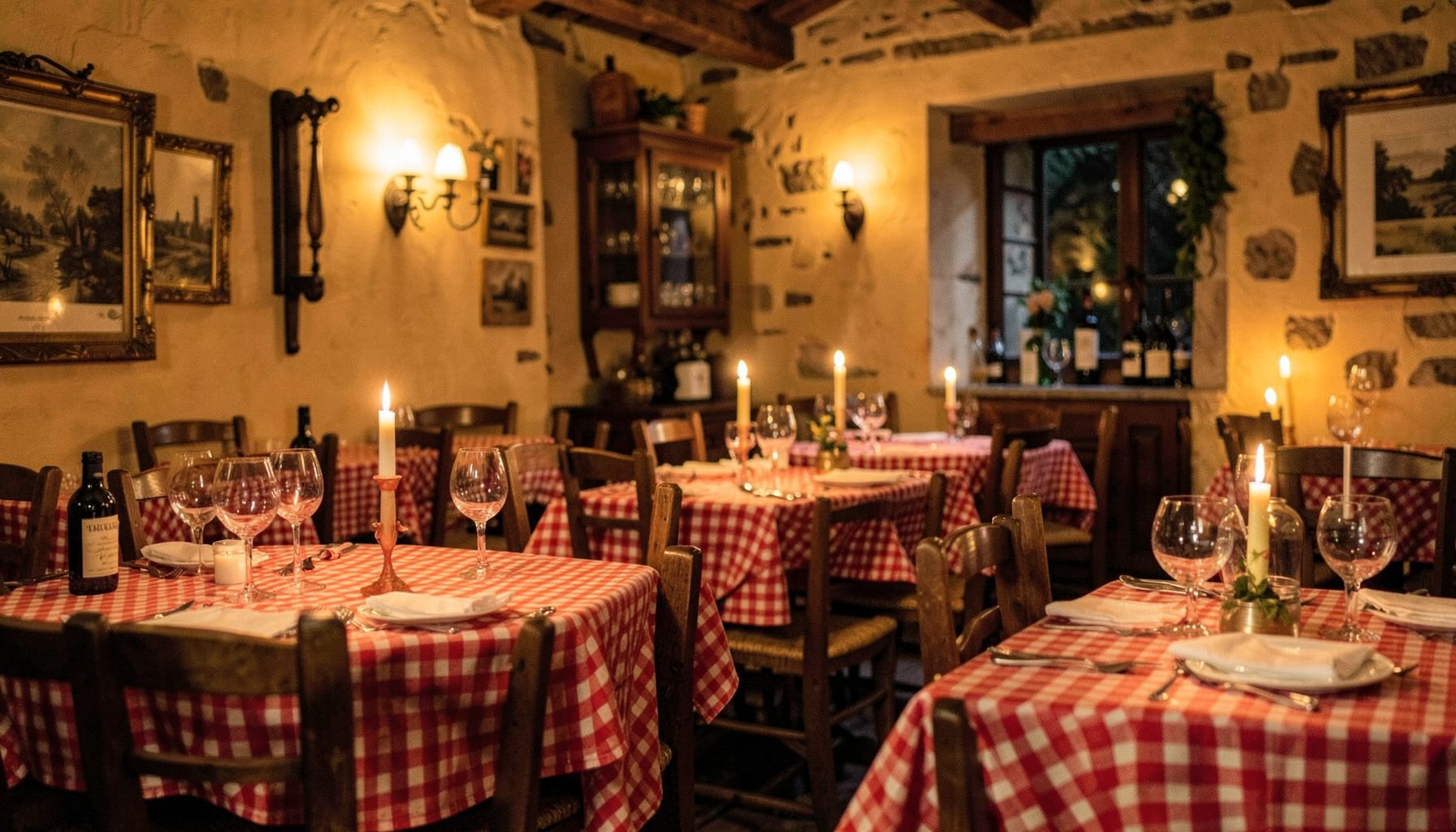
Decide how the tasting should feel before anything reaches the table. A rustic Italian table — a board of cured meats, folded linen, a mix of tumblers and wine glasses — flatters cheese far better than numbered placemats and a formal spittoon. In our dining room in Sonoma County, we pour small measures and change the food between courses so the palate stays alert. The goal is pleasure and conversation, not a right answer for every guest.
Allow two to three hours for the whole event and cap the menu at six pairings. Beyond that, the palate dulls and the host ends up explaining instead of hosting. A tasting menu also suits a mixed group better than a set meal: people who want one more glass can stay for the final pour, while early leavers have already eaten something worth remembering.
Choose a theme so the menu feels coherent. Regional Italian works beautifully — Emilia-Romagna cheeses with northern wines, say, or Campania's buffalo mozzarella with Fiano — and it gives your guests a story to follow. Taverna Santi runs private events, seasonal suppers and chef-led demonstrations along these lines, and the same narrative structure is what makes a home tasting memorable.
Sequence the tasting from light to rich
Order matters more than novelty. Begin with sparkling wine and light, fresh cheeses such as ricotta or burrata, then move to softer aged cheeses and more textured whites, and finish with a blue or a hard aged wheel alongside a red or a fortified wine. Sweet cheese and dessert wine belong at the end, because sugar flattens everything that follows it.
Portion sizes are the part most hosts get wrong. For ten guests, plan on roughly 200 to 250 grams of each cheese, which allows everyone to taste several pieces without ending up with a block of cheese on the table. A standard tasting pour is around 60 millilitres; for a casual party in Australia, a slightly larger 90 to 120 millilitre glass keeps things relaxed while still leaving the wine the centre of attention.
Build in pauses. A cracker or a piece of bread between pairings cleans the mouth, and a glass of sparkling water does more than any elaborate palate cleanser. If you are serving reds, put half the bottles in the fridge an hour before guests arrive — Australian summer rooms warm quickly, and over-warm red wine tastes flat and alcoholic against firm cheese.
Pick cheeses with range and character
Aim for five or six cheeses that contrast in texture, milk and intensity. Fresh and creamy (buffalo mozzarella, stracciatella), semi-soft and elastic (young pecorino, bocconcini), firm and nutty (Parmigiano Reggiano, aged cheddar), and one strong blue with veins (Gorgonzola, Stilton) give the palate a genuine journey. A washed-rind cheese adds a savoury, almost mushroomy note that many guests remember long after the evening.
Sourcing is simpler in Australia than most people expect. Melbourne's Queen Victoria Market, Adelaide Central Market and Sydney's inner-suburb delis stock farmhouse and raw-milk cheeses, and weekend growers' markets often feature small producers selling cut wheels by the piece. Tasmanian Pyengana-style raw-milk cheddars are a good example of the range now available, while mainstream brands like Bega and Western Star work perfectly well when you are feeding a larger group.
Balance the board with something acidic and fresh. A little acidity cuts through the richness of a young washed rind, and aged balsamic is a classic partner for hard cheese — our notes on Modena balsamic vinegar guide explain how the syrupy and fruity styles behave with different wheels. Fresh fruit, salted nuts, fig chutney and a pile of plain crackers fill the gaps between cheeses.
Match each cheese to a glass of wine
The pairing rules worth remembering are simple: protein-friendly tannins handle firm and aged cheese, high acidity refreshes creamy ones, salt brings out fruit in a red, and blue cheese needs either sweetness or a fortified wine to stay pleasant. Italian grapes make this easy. Prosecco or Franciacorta with fresh mozzarella, Verdicchio or Grechetto with pecorino, Chianti or Sangiovese with a mature Tuscan hard cheese, and a bracing Amarone with a blue or a very aged Parmesan are reliable combinations.
Match intensity to intensity. A delicate, lightly oaked white can be overwhelmed by a punchy blue, while a full-bodied red without enough acidity will disappear beside a salty aged cheese. If you buy one bottle for the table rather than one per course, pick a mid-weight red with bright acidity — a Barbera or Sangiovese from Australia or Italy — because it survives most cheeses without dominating them.
Let guests taste the cheese before the wine, then again afterwards. That second sip is where the pairing reveals itself, and it slows the room down in the best way. Provide a small glass of the same wine alongside each cheese if the budget allows, and keep a bottle of water within reach so nobody is forced to drink more wine than they want.
Plan the menu and the shopping run
A realistic budget for ten guests sits around $250 to $400 for six cheeses, three wines and accompaniments, before plates and glasses. Shop early in the week, because specialty wheels from the market and smaller producers sell out by Saturday. Buying wine through a bottle shop rather than a supermarket almost always gives better value for a mid-range Italian bottle, and clicking and collecting from a local bottle shop on Friday afternoon is an ordinary Australian errand that fits neatly into this schedule.
A six-pairing tasting menu for ten guests
- Prosecco and buffalo mozzarella with fresh figs and a pinch of sea salt — the fizz and salt cut straight through the cream.
- Verdicchio and young pecorino with lemon zest, toasted almonds and rocket for something green and peppery.
- Sauvignon Blanc or Grüner Veltliner and goat cheese with honey, pear slices and a few walnuts.
- Chianti and aged Parmesan-style hard cheese with a balsamic reduction, plus a slice of cured salami from the board.
- Barbera or Sangiovese and a washed-rind cheese with quince paste or cherry jam to balance the funk.
- Vin Santo or a late-harvest white and Stilton with plain crackers, ending on sweetness and salt.
Shopping checklist for the day before
- Six cheeses, cut into tasting-sized wedges and stored separately in the fridge.
- Three or four wine bottles, with reds and fortified wine chilled in advance.
- Crackers, a sourdough loaf, salted nuts and two kinds of seasonal fruit.
- Still and sparkling water, plus a corkscrew, a board, small knives and napkins.
- A printed or handwritten card naming each pairing, if you want guests to follow along.
Serve the board and the glasses with care
Take the cheeses out of the fridge 45 to 60 minutes before serving, but keep the blues sealed until the final course — they dominate everything if they warm up early. Arrange the board from mild to strong, in a loose arc rather than a neat grid, and give each cheese its own small knife so guests aren't cutting across the rind with a tomato knife.
Serve whites at cellar temperature and reds slightly warmer, around 16 to 18 degrees. A simple rule that works in most Australian homes: if the room feels warm, the wine probably is too. Keep a bucket of ice nearby, use it for half the reds and for the Prosecco. Plate food between pairings rather than crowding the board — a few slices of cured meat, a grilled bread, a roasted vegetable with olive oil — and it keeps the wine from tasting like the only thing on the table.
The Australian habit of putting out a cheese board for guests to graze from while the kitchen finishes is a gift for this style of party. It fills the gap before the formal pairings begin and stops everyone hovering over the kitchen door. Late afternoon in a Sydney or Brisbane summer, though, calls for shade, ice and lighter pours than a Melbourne or Hobart evening would.
Check the local rules before the event
Alcohol served in a private home for a private dinner party is generally fine under state liquor laws, but the line changes the moment money changes hands. Selling bottles at the door, charging an entry fee that includes drinks, or running the event at a venue with a general class licence requires the appropriate approval in most states. Victoria's Liquor Licensing Act 1997, South Australia's Liquor Licensing Act 1997 and New South Wales' liquor legislation all apply different conditions to public events and functions, so check the state rules for wherever the party happens.
Two practical points are worth remembering. Serving alcohol at a function in New South Wales generally requires someone with current responsible service certification, and across the country the minimum purchasing age is 18 with no exceptions for a guest who "looks old enough". Wine sold at retail must also display a standard drink declaration, so you can use the label to keep pours within a sensible limit; one standard drink is 10 grams of alcohol.
Plan for the people who are not drinking. Sparkling water, soft drinks and a plate of roasted nuts at the same time as the wine makes a tasting genuinely inclusive, and food slows absorption, which matters at a long party. Finally, check the labels: since late 2023, Australian wine labels must declare sulphites and other allergens, and cheese labels must state milk content and any added allergens. Raw-milk cheese is perfectly legal here, unlike in some European countries, but flag it for guests who are pregnant or have health conditions.
When the menu is planned with restraint, the evening runs itself. A few good wheels, three bottles chosen for contrast and a clear order of play will outperform a dozen of everything, and the same sequence that works on our tables in Geyserville travels easily to a back verandah in Melbourne or a terrace in Perth.