The quiet alchemy of balsamic vinegar: from Modena to the plate
Two spoonfuls of dark, syrupy liquid can carry the memory of a sunlit hillside in Emilia-Romagna, the patience of a master cask-maker, and centuries of quiet refinement. Balsamic vinegar is one of Italy's most storied pantry essentials, yet outside its home region it remains widely misunderstood. Many bottles on supermarket shelves bear little resemblance to the slow-aged elixir that has been produced around Modena and Reggio Emilia for generations. To understand the difference is to understand an entire philosophy of food — one built on restraint, terroir, and time.
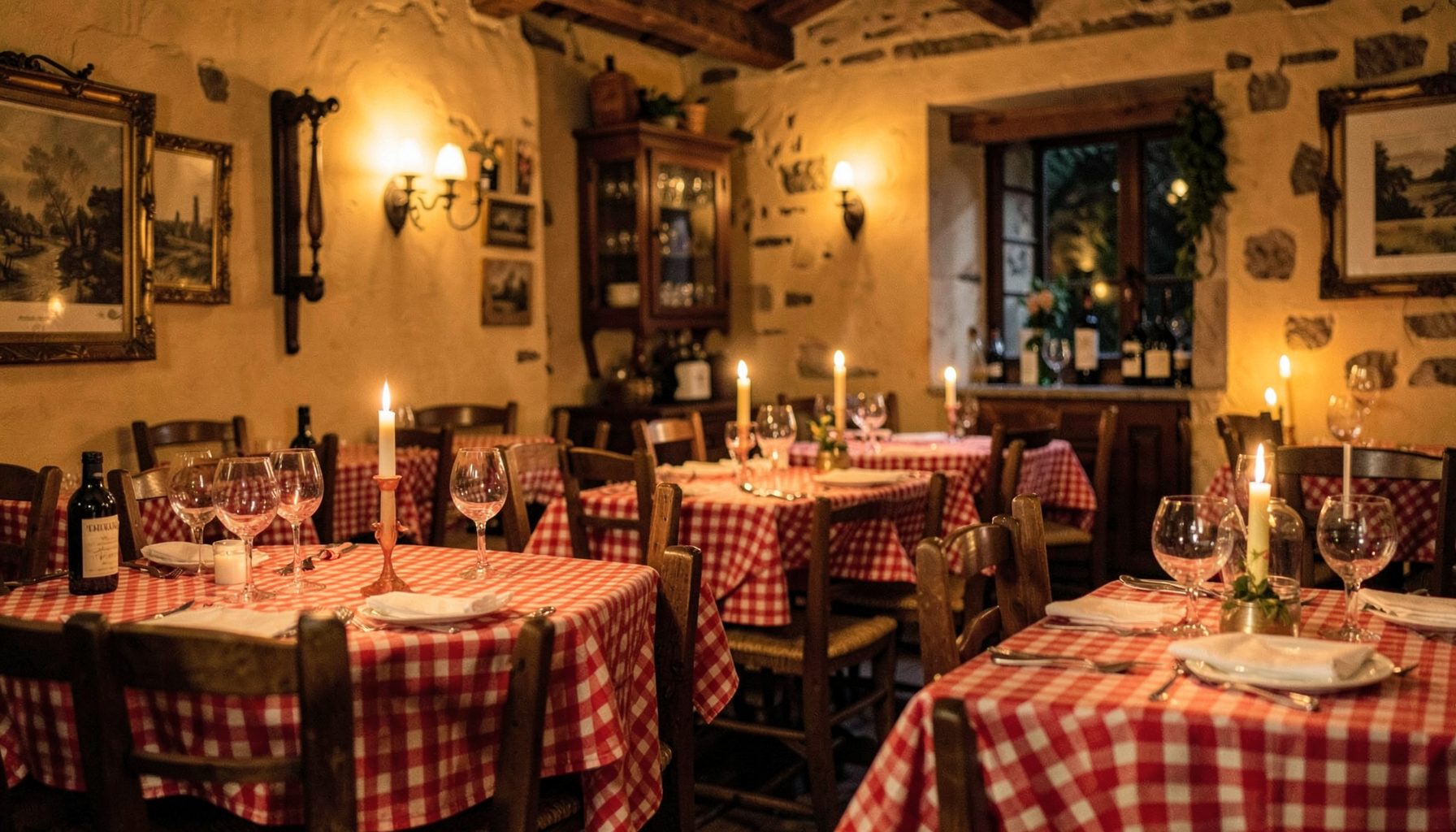
That philosophy travels well. At Taverna Santi, in the oak-dotted hills of Sonoma County, the same reverence for seasonal produce and traditional technique shapes how a single drop of aceto balsamico finishes a plate of wood-grilled vegetables or a tangle of handmade pasta. The journey from Modena's lofts to a Californian table tells a story worth knowing before the bottle is ever uncorked.
Roots in the hills of Emilia-Romagna
The earliest references to a cooked grape must appear in northern Italian documents from the eleventh century, when local nobility prized a dense, sweet liquid used to flavour meats, fish, and even offered as a gift to foreign dignitaries. The provinces of Modena and Reggio Emilia, sitting between the Apennines and the Po Plain, became the heartland of this craft. The climate proved ideal: hot summers encouraged concentration in the barrels, while cold winters allowed the slow fermentation that gives traditional balsamic its characteristic balance of sweetness, acidity, and complexity.
Family production remained a private affair for centuries. Each household kept its own battery of casks — sometimes five, seven, or more barrels of decreasing size, linked in a perpetual solera-style system that allowed older vinegar to be drawn off and replaced by younger product. The result was a family inheritance, passed down with the same care as a cellar of fine wine. In Australia, where Italian migrants from Emilia and Veneto arrived in waves after the Second World War, this heritage shaped entire neighbourhoods. Walk down Lygon Street in Carlton, Melbourne, or through Haberfield in inner-western Sydney, and the cultural imprint of those regions is unmistakable — a deep affection for cured meats, slow ragùs, and the careful use of condiments rather than heavy sauces.
How traditional balsamic is made
Authentic production begins with Trebbiano or Lambrusco grapes, pressed and cooked slowly in open copper pots until the must reduces to a thick, dark syrup. Nothing is added — no caramel, no thickener, no sugar. The cooked must is then transferred to the smallest of a battery of oak barrels, typically oak but sometimes chestnut, cherry, juniper, or mulberry, each lending its own quiet note. Over the following years, the liquid migrates from cask to cask, evaporating, concentrating, and developing the layered tang that defines the category.
The most rigorous expression of this craft is Aceto Balsamico Tradizionale di Modena DOP, regulated by a consortium of producers and protected under European Union law. Each bottle is bottled, numbered, and sealed by the consortium, and aged for a minimum of twelve years — though many examples rest for twenty-five or longer. The other protected designation, Aceto Balsamico Tradizionale di Reggio Emilia DOP, follows similar rules, with its own distinctive red, silver, and gold capsule system indicating age. Australian consumers benefit from a strict food-labelling regime, which under the Australia New Zealand Food Standards Code requires clear disclosure of country of origin, ingredients, and any added sugars or colourings — making it far easier to tell a long-aged product from a supermarket imitation.
Reading the label with confidence
Walk through the condiments aisle of any Italian deli in Brisbane's Fortitude Valley, Adelaide's Central Market, or Perth's Subiaco, and the variety on offer can feel bewildering. The first rule is simple: only two products carry the protected DOP designation — Traditional of Modena and Traditional of Reggio Emilia. Everything else falls under IGP classification or, more often, under the broad category of condimento grade balsamic, which may be excellent but is not subject to the same regulatory oversight.
Commercial balsamic vinegars, often labelled simply "Aceto Balsamico di Modena IGP," are blended with wine vinegar and may contain caramel colour and a small percentage of concentrated grape must. They remain useful for everyday cooking — a quick reduction for a pan sauce, a glaze for roasted vegetables — but they lack the density, viscosity, and depth of the traditional product. A small drop of the real thing, placed on the back of a spoon and tilted, should coat the surface like warm honey, leave a clean trail, and offer a perfume that shifts between cooked fig, aged hardwood, and a gentle tang of natural acidity. If it runs like water, it is not what the label suggests.
A cook's approach in the kitchen
Once a quality balsamic is in the kitchen, restraint becomes the guiding principle. The traditional product is rarely cooked; heat dulls its complexity. Instead, it is used as a finishing note — a few drops over a slice of Parmigiano Reggiano, a drizzle across grilled peach or fig, a small pool beneath a slice of seared duck breast. Its sweetness balances the saltiness of cured meats and aged cheeses, while its acidity cuts through the richness of slow-braised meats and creamy risottos.
For everyday cooking, a mid-range IGP balsamic becomes the workhorse. It can be simmered with a splash of stock to glaze roasted root vegetables, whisked into a vinaigrette with extra-virgin olive oil and a touch of Dijon, or reduced to a sticky syrup to dress a Caprese salad in summer. The key is to taste as you go, remembering that even a small reduction intensifies the sweet-tart profile dramatically. Chefs at home and in professional kitchens alike are increasingly treating the bottle with the same care once reserved for fine olive oil — a quiet finishing element rather than a heavy-handed ingredient.
Pairing it at the table
At the table, pairing can become a small ritual. A young balsamic, with its brighter fruit and lighter syrup texture, pairs beautifully with fresh tomato salads, caprese-style plates, or grilled seafood. An older balsamic, with its darker, more brooding notes of dried fruit, tobacco, and toasted wood, belongs alongside aged cheeses, roasted game, or simply a small dish of fresh strawberries and cracked pepper. Australian restaurants have embraced this nuanced approach; many chefs in Sydney and Melbourne now list the age and origin of the balsamic on their dessert menus, treating it with the same respect as a tawny port or a vintage Madeira.
A classic pairing worth trying at home is Parmigiano Reggiano with a few drops of twelve-year-old tradizionale, served with a small glass of Lambrusco. Another is vanilla ice cream drizzled with aged balsamic and topped with crushed walnuts — a combination that has found its way onto menus from Carlton to Crows Nest. The vinegar acts as a seasoning, sharpening the dairy and pulling the sweetness of the dessert into focus.
Bringing it to the Sonoma table
At Taverna Santi, the bottle is treated as one more expression of the season. The kitchen draws on Modena's craft the same way it draws on the Sonoma farmers who supply the day's tomatoes, the Sonoma Coast oysters, or the Lacinato kale that grows in neighbouring plots. A wooden spoon of aged balsamic might finish a plate of hand-rolled tagliatelle dressed only with olive oil and shaved garlic. It might be reduced with a splash of local Zinfandel until syrupy, then spooned over grilled stone fruit in late summer. It might appear as a quiet counterpoint to burrata, alongside a slice of toasted sourdough and a scatter of cracked black pepper.
What the diner tastes is the result of choices made years, sometimes decades, before the dish was plated. The barrels in Modena, the standards that protect them, the producers who refuse to hurry the process, and the chefs who understand how to let such an ingredient speak — all of it converges in a single, modest drizzle. To know balsamic is to slow down, to taste carefully, and to recognise that some of the most profound flavours in a kitchen are the ones that have simply been allowed time.