Heirloom tomatoes bring depth to our caprese salad
At Taverna Santi, our kitchen follows a quiet rule: the best dishes depend on the best ingredients. A caprese salad sounds almost embarrassingly simple, a few slices of tomato, fresh mozzarella, basil, olive oil, and salt. When every element arrives at the table exactly as it should, the plate becomes something else entirely. Heirloom tomatoes make that transformation possible. They carry a depth of flavor that supermarket varieties simply cannot match.
Many of our guests travel from Australia, where the appreciation for Italian food runs deep. Italian-Australian communities in Melbourne, particularly around Carlton and Lygon Street, have shaped the country's dining culture for generations, and visitors from Adelaide, Sydney, and Brisbane often arrive with a clear sense of what authentic cucina italiana should taste like. Australian diners also understand seasonal cooking, given the parallels between Mediterranean climates and the sun-soaked wine regions of Margaret River, Barossa Valley, and McLaren Vale.
Heirloom tomatoes are not a marketing term. They are open-pollinated varieties passed down for generations, each one carrying a distinct history and flavor. Some of our favorites come from farms just down the road, where Sonoma County growers cultivate types such as Green Zebra, Cherokee Purple, Brandywine, and Cuore di Bue. Each variety brings something different: the bright acidity of Green Zebra, the smoky sweetness of Cherokee Purple, the rich, almost wine-like depth of Brandywine.
The choices that reach your plate are deliberate. From the farms we source to the way we slice each tomato, every detail is meant to honor a dish that has been on Italian tables for generations.
The story behind heirloom varieties
Heirloom tomatoes trace back to seeds saved by farmers and gardeners over many decades, sometimes more than a century. Because they are open-pollinated, the plants grow true from seed, preserving flavor, color, and form in ways hybrid varieties often sacrifice for shelf life and uniformity. The result is a riot of shapes and shades: stripes, swirls, dusky purples, sunset oranges, and yellows that look almost like small moons.
The genetic diversity matters at the table. A standard grocery tomato has been bred for durability and consistent appearance, which often means a flatter, more watery profile. Heirlooms, by contrast, deliver layered acidity, concentrated sugars, and aromatic compounds that read differently in every variety. When we slice them for a caprese, that complexity translates directly into the dish, before the mozzarella or basil enters the picture.
We also appreciate the stories attached to each variety. Some originated in Italian villages, others in Appalachian gardens or Mennonite farms in Pennsylvania. Honoring that history feels aligned with our respect for traditional Italian cooking, and the names alone, Cherokee Purple, Black Krim, San Marzano, evoke the people and places that kept these seeds alive.
Sonoma County's terroir and climate
Geyserville sits in the northern part of Sonoma County, where warm days, cool nights, and a long, dry growing season give tomatoes the conditions they love. The region's well-drained soils, often laced with gravel and clay left by ancient riverbeds, encourage deep root systems and concentrated fruit. That combination produces tomatoes with thicker skins, smaller water content, and the kind of sun-warmed intensity that defines a memorable caprese.
The climate parallels regions in Australia that travelers know well. McLaren Vale and the Barossa Valley share a similar Mediterranean rhythm, where grapes and stone fruit thrive. Margaret River in Western Australia also echoes parts of coastal Sonoma. These parallels explain why Australian diners tend to recognize the flavors of our food so easily. The plants in both places grow under skies that mimic southern Italy, and the kitchens reflect that shared lineage.
Local farmers have refined their tomato crops to suit this environment. We work with growers who plant at the right time, prune carefully, and harvest at peak ripeness, sometimes the same morning a dish will be served. That kind of proximity, fruit to fork in a matter of hours, is one of the quiet privileges of cooking in a place like Sonoma.
Italian technique and honest preparation
Italian cooking rarely depends on complication. Our caprese uses no tricks, no reductions, no embellishments. The tomatoes are sliced thick enough to hold their shape yet thin enough to yield on the fork. The mozzarella comes from a small Sonoma dairy that produces a fresh, hand-pulled variety with a soft, milky texture. Basil leaves are torn, not chopped, to keep their essential oils intact. Extra-virgin olive oil, sourced from a Sonoma producer who presses within weeks of harvest, finishes the plate along with flaky sea salt.
The lesson we keep returning to is restraint. A caprese with poor tomatoes becomes a lesson in disappointment. A caprese with heirlooms at their peak reminds us that the dish, at its core, asks the ingredient to speak clearly. Adding anything more would only get in the way.
Temperature matters as well. Tomatoes should never go into the refrigerator before serving, since cold dulls both flavor and aroma. We bring them to room temperature, slice them just before plating, and assemble the dish within minutes. The plate is dressed at the last possible moment so the salt draws out the tomato juices without turning the mozzarella watery.
Pairing with regional wines
A caprese invites a thoughtful glass of wine, and our cellar gives us many options from Sonoma County and beyond. Heirloom tomatoes carry enough acidity and savory depth to stand alongside structured whites and lighter reds. A Vermentino from a nearby Sonoma producer works beautifully, lifting the basil and cleansing the palate between bites. So does a chilled rosé, particularly the saignée-style bottlings coming from Russian River Valley.
For guests who prefer red wine, we often pour a light, savory Sangiovese or a Montepulciano from one of our local wineries. These grapes, originally Italian, have found a second home in Sonoma's hills, and their bright cherry and herbal notes align with the umami in the tomatoes. Australian guests frequently recognize echoes of Sangiovese grown in McLaren Vale or Heathcote, regions where Italian immigrants planted vines decades ago and helped shape the local wine identity.
A seasonal philosophy
Our menu changes with what the farms can deliver, which means the caprese itself shifts throughout the summer. In early July, when Green Zebras and yellow varieties arrive, the plate looks bright and lean. By late August, the deeper purples and browns of Cherokee Purple and Black Krim take over, and the salad takes on a moodier, richer character.
This rhythm of seasonality connects us to a wider conversation happening in Australian kitchens. Chefs in Adelaide, Perth, and Hobart have championed similar farm-driven philosophies, and the farm-to-table movement remains strong from the Adelaide Hills to the Mornington Peninsula. Diners who value this approach tend to appreciate that a caprese in February at Taverna Santi is not the same plate as one served in June, and that the small variations are part of the appeal.
The Taverna Santi experience
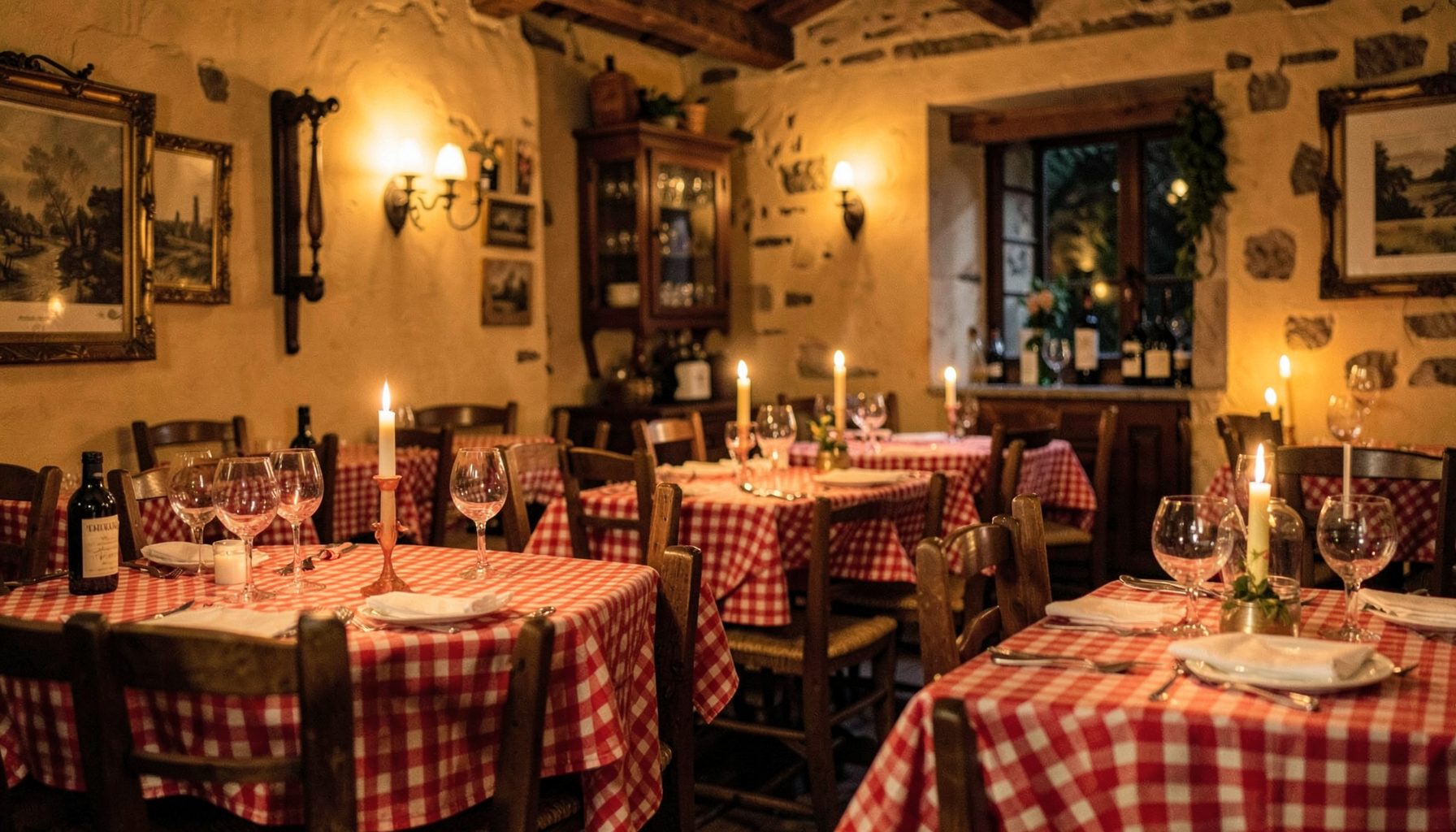
Our dining room in Geyserville is small and welcoming, with a rustic interior that echoes the agricultural landscape outside. Wooden tables, soft lighting, and an open kitchen where guests can watch the cooks at work all contribute to a feeling of being somewhere grounded. We host private events, seasonal suppers, and chef-led demonstrations that often focus on specific ingredients. Tomatoes feature prominently each summer, and our heirloom tastings have become a favorite among returning guests.
We invite travelers, including those visiting from Australia, to experience the caprese at the table where it is built. Wine pairings, a quiet view of the Sonoma hills, and the chance to speak with our kitchen team about the farms that supply us are all part of what we offer. Reservations can be made through our website, and seasonal events are listed on our calendar throughout the year.
How to enjoy heirloom tomatoes at home
For guests inspired to recreate a caprese after visiting, a few simple habits help:
- Choose tomatoes with heavy weight for their size and a fragrant, almost perfumed smell at the stem end.
- Slice just before serving and let the pieces rest at room temperature for fifteen to twenty minutes.
- Use fresh mozzarella that contains only milk, salt, rennet, and starter, nothing extra.
- Tear basil leaves by hand and add them last so their oils stay lively.
- Finish with a generous pour of bright, peppery extra-virgin olive oil and flaky sea salt.
- Skip the balsamic glaze if the tomatoes are at peak, since strong vinegar can overshadow their natural sweetness.