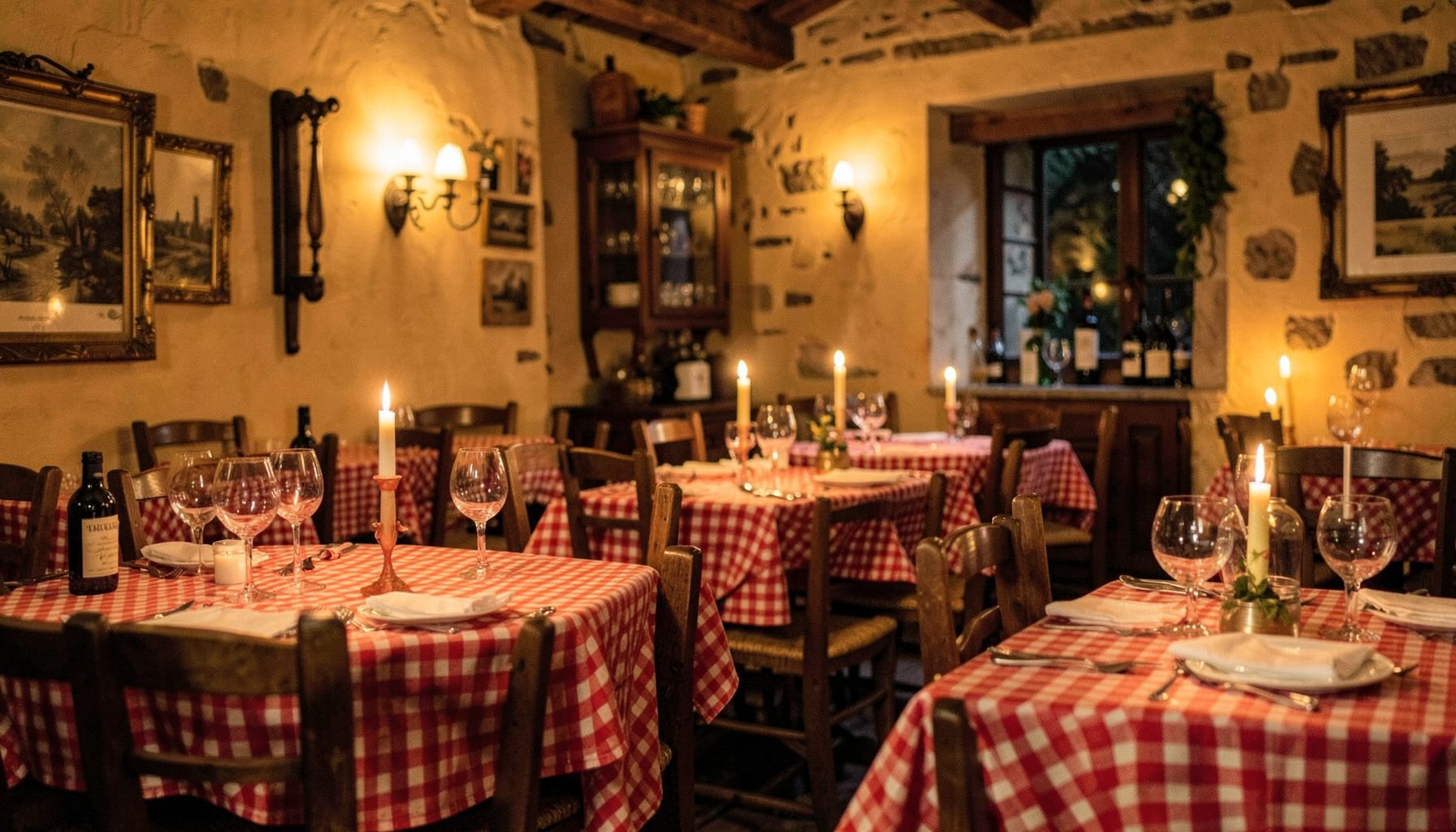
Freshness in motion: why our menu changes with the seasons
At Taverna Santi, the menu is shaped by what is growing, what is abundant and what is worth placing at the centre of a plate. Our kitchen is in Geyserville, in Sonoma County, where vineyards, orchards, vegetable growers and small producers create an unusually rich food landscape. A fixed menu would make it harder to honour that landscape.
Seasonal cooking gives us a practical way to serve ingredients at their peak. A tomato picked when it is fully ripe needs very little: perhaps good olive oil, basil, sea salt and the heat of a wood-fired oven. A winter squash asks for a different treatment, such as roasting, braising or folding through handmade pasta.
For Australian guests, the calendar can feel slightly upside down. When summer produce is abundant in California, Australia may be moving into winter, and when our kitchens are working with late-season grapes or stone fruit, Melbourne or Sydney diners may be thinking about cooler-weather dishes. The principle remains familiar: the best ingredients are those that suit the season and have not travelled further than necessary.
This approach is about more than changing a list of dishes. It influences how we work with farmers, plan private celebrations, select regional wines and build an intimate dining experience. Freshness is a daily practice, guided by place, timing and respect for the ingredient.
A menu that follows the land
Sonoma County has a distinct agricultural rhythm. Spring brings tender greens, peas, asparagus and fragrant herbs. Summer fills market stands with tomatoes, peppers, beans, stone fruit and berries. Autumn is marked by grapes, squash, apples, pears and mushrooms, while winter encourages sturdy greens, roots, citrus and slow-cooked preparations.
Our menu responds to those shifts rather than forcing ingredients into a year-round pattern. When a farmer has an exceptional crop of fennel or a grower brings us beautifully bitter radicchio, those ingredients can influence the evening’s dishes. The result is a menu with a sense of place, rather than a catalogue of items disconnected from their surroundings.
Peak flavour needs less intervention
Ingredients harvested in season tend to bring greater flavour, aroma and texture to the kitchen. A ripe peach can carry a dessert with only a little cream or cultured cheese. A young courgette may need no elaborate sauce, while a carefully grown head of cabbage can become the foundation of a wood-fired dish.
This simplicity is central to Italian cooking. Traditional techniques are designed to reveal quality, not conceal it. Handmade pasta, broths, preserved vegetables and slow braises allow the character of the main ingredient to remain clear. Seasonal rotation gives our chefs the freedom to cook with restraint when the produce is already speaking strongly.
Working closely with local farmers
A rotating menu depends on relationships. We stay in conversation with farmers and producers about planting schedules, crop sizes, weather patterns and what is likely to be available each week. This helps us purchase with greater care and reduces the temptation to order ingredients simply because a permanent menu requires them.
It also creates room for flexibility. A cool spring, a hot spell or an early harvest can change what arrives at the back door. Instead of treating those variations as disruptions, we see them as useful information. They help us make decisions that reflect the real agricultural year in Sonoma County.
Less waste, more thoughtful cooking
Seasonal purchasing can support a more responsible kitchen because it encourages us to use what is plentiful. Abundant vegetables can appear in several forms across the menu: roasted, raw, preserved, folded into pasta fillings or simmered into a sauce. Stems, leaves and trimmings may become stocks, pickles or garnishes.
This approach also helps us avoid relying heavily on produce flown or trucked long distances to maintain a dish outside its natural season. Sustainability is not a single gesture; it is a collection of decisions about sourcing, portioning, preservation and preparation. Using an ingredient fully is one of the most direct ways a restaurant can respect the work behind it.
Seasonal dining across the Australian calendar
Australian diners understand the pleasure of seasonal produce, from stone fruit in summer to root vegetables and brassicas through the cooler months. Guests visiting from Brisbane, Sydney, Melbourne or Adelaide may notice that our menu does not follow the same calendar they have left at home. That contrast is part of the experience of dining in Sonoma.
A Melbourne guest might associate a winter evening with a bowl of warming pasta while our California kitchen is working through the last of the summer harvest. Someone arriving from Sydney may recognise the value of farmers-market cooking but encounter different varieties, growing conditions and regional traditions here. We use that difference as a point of connection, explaining the produce and the techniques rather than assuming every season means the same thing everywhere.
Australian food culture also places real value on provenance, independent producers and relaxed hospitality. Whether the occasion is a long lunch after a visit to a market, a winery trip in the Yarra Valley or a weekend meal in the Adelaide Hills, diners often want to know where their food comes from without feeling lectured. Our seasonal menu offers that story in a natural, delicious form.
The menu changes, the welcome remains
Rotation does not mean losing the identity of Taverna Santi. The foundations remain: Italian technique, handmade pasta, vegetables treated with care, wood-fired cooking and wines selected to suit the food. What changes is the expression of those ideas as the year moves forward.
A familiar guest may find a new pasta filling, a different vegetable plate or a fresh regional pairing at each visit. For private events, celebrations and seasonal suppers, this creates a meal that belongs to a particular time and place. A spring gathering should feel different from an autumn dinner, just as a harvest tasting should have its own character.
Our chef-led demonstrations follow the same principle. They show how a few excellent ingredients can become a complete dish through technique, timing and attention. The lesson is rarely about following a rigid formula. It is about learning to observe what is available and cook accordingly.
What seasonal freshness means at the table
A changing menu can make dining feel more connected to the moment. Here are some of the qualities guests may notice:
- Produce selected for flavour and condition rather than for year-round consistency
- Handmade pasta and sauces adapted to the vegetables, herbs and proteins currently available
- Wood-fired dishes that highlight the natural sweetness and texture of seasonal ingredients
- Regional wines chosen to complement the menu as it changes
- Thoughtful use of whole ingredients, including preserved elements and kitchen-made stocks
That sense of immediacy is especially rewarding in an intimate restaurant. The meal feels individual rather than mass-produced, and the kitchen has space to respond to what farmers are growing now. A dish may appear for a short time, disappear when its season ends and return in another form when the ingredient comes around again.
A philosophy that keeps evolving
Freshness is sometimes described as a quality an ingredient either has or does not have. In practice, it is affected by harvest timing, transport, storage, preparation and the care taken in the kitchen. Seasonal cooking brings all of those factors into focus.
At Taverna Santi, rotating the menu is a way to stay attentive. It keeps us close to local growers, gives our chefs room to create and lets guests taste the changing character of Sonoma County. The menu may move from bright, herb-filled plates to earthy pastas and slow-cooked dishes, but the purpose remains steady: serve food with integrity, generosity and a clear connection to the season.