The tradition of Sunday gravy: A Sonoma-Italian twist
Sunday gravy is the slow, ruby-red sauce that turns Sunday lunch into a household ritual. Its roots lie in Italian-American families, where a pot of tomato sauce simmered with sausages, beef or other cuts while the household prepared for the day. The finished sauce became the centrepiece of a long, generous meal, and its aroma often signalled that the kitchen was already at work before anyone sat down. At Taverna Santi in Geyserville, that tradition takes a distinctly Sonoma-Italian turn.
For Australian diners, the idea is instantly legible: Sunday lunch, a steaming pot, bread for mopping up sauce, and no hurry at the table. It also involves a small translation, because gravy in much of Australia means the savoury drippings served over roast meat, while Sunday gravy resembles a slow-cooked tomato ragù. That distinction makes the dish both familiar and intriguingly different from the standard Sunday roast.
A family pot meets a Sonoma hearth
Sunday gravy has no single canonical formula. Some cooks build it around pork sausage and beef; others add braciole, ribs or a rich stock, while a vegetarian household might create depth with mushrooms, lentils or vegetables. Across the variations, the shared method matters more than the list: ingredients are browned, combined with tomato, and simmered until the flavours become rounded and unified.
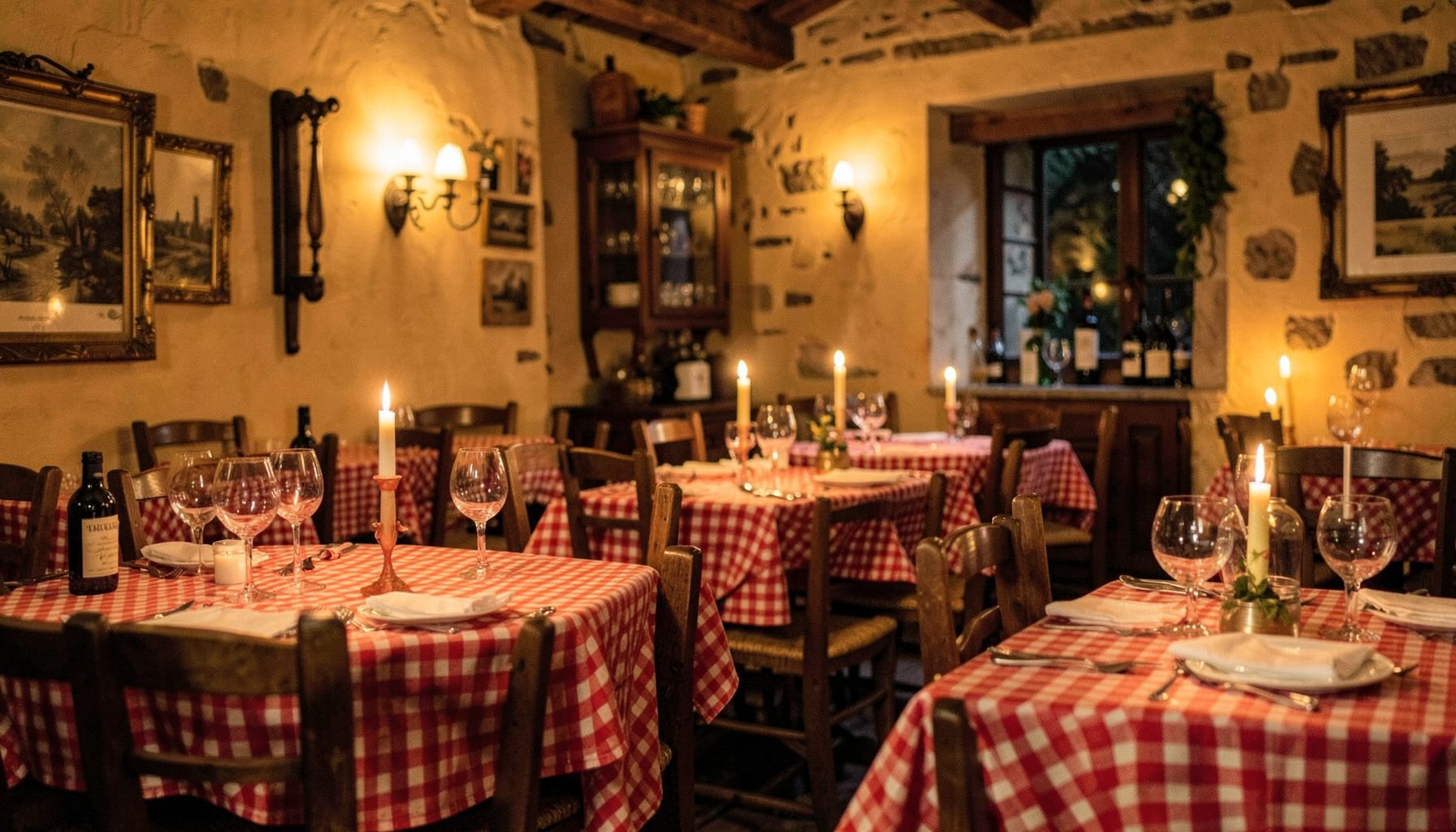
At Taverna Santi, the rustic dining room and wood-fired kitchen make that slow process part of the experience rather than something hidden behind the service. Handmade pasta and regional wines belong to the same table, just as pasta and wine naturally accompany a Sunday gravy in an Italian home.
The Sonoma setting adds produce with its own character. Rather than treating a tomato as a neutral base, the kitchen can highlight what nearby farms bring at a particular moment, then use Italian technique to clarify and deepen its flavour. The result should still taste rooted in the Sunday gravy tradition: generous, savoury and made for sharing.
The ingredients and choices that shape the meal
The pot begins with soffritto, the gently cooked mixture of onion, carrot and celery that gives a sauce its foundation. From there, good olive oil, a well-made tomato base and the choice of meat or vegetables determine its direction.
- Extra-virgin olive oil rounds out the soffritto and carries the first aromatic flavours.
- Onion, carrot and celery create sweetness and structure without crowding the tomatoes.
- Ripe crushed tomatoes or passata bring acidity, colour and the body of the sauce.
- Sausage, beef, mushrooms or another braising ingredient supplies savoury depth.
Time is the final ingredient. A long, uncovered simmer reduces the tomato and concentrates the aromas, while a restrained addition of salt or pasta water can adjust the consistency without flattening its character. Fresh herbs and grated pecorino or parmesan are often kept for the table so each diner can finish a bowl to taste.
Service should feel as relaxed as the cooking. At home, the pot can remain in the middle of the table; at Taverna Santi, the rustic setting turns that generous style into the spirit of the meal.
- Warm rustic bread first, with olive oil ready for dipping into the sauce.
- Toss handmade pasta and spoon over enough gravy to coat each strand without hiding it.
- Add braised meat or vegetables in larger portions for a complete Sunday lunch.
- Pair the plate with Sangiovese, Chianti or another bright Italian red and let the wine deepen with the meal.
None of these choices needs to be elaborate. A well-made tomato, properly browned aromatics and a patient simmer can produce a sauce that feels complete, particularly when it is used to bring people together.
How Sonoma changes the recipe
Sonoma County changes the backdrop to the familiar Italian-American ritual. Farms and growers supply produce according to the season, allowing the kitchen to follow cycles rather than demand identical tomatoes and herbs all year. That flexibility supports a sustainability-minded approach in which well-used, peak ingredients do the most work.
The wood-fired element at Taverna Santi adds another layer. Fire can bring a smoky edge to vegetables and other dishes, while the restaurant’s vegetable-focused plates show that the same attention to sourcing need not centre on meat. A slow tomato sauce can hold roasted or braised vegetables just as comfortably as sausage or beef, giving the table an inclusive route into the tradition.
This philosophy extends to the restaurant’s broader seasonal programme. Taverna Santi’s October menu details show how a changing menu can become a communal supper shaped by local produce and careful Italian technique.
Sunday rhythms on an Australian table
In Melbourne and Sydney, as across much of Australia, Sunday gravy would sit comfortably beside the familiar Sunday roast. The timing would probably be similar too: lunch often begins around noon or earlier, with roast potatoes, vegetables and meat sharing the middle of the table. For many households, the sauce would be more substantial than the thin brown gravy used for drizzling over meat, and more central to the meal.
The social language is familiar as well. Australians may call the late part of the day arvo, and a long Sunday lunch can easily fill that time before an afternoon of AFL. Daylight saving can shift dinner towards the evening in summer, but weekend schedules still tend to pull eating earlier than a weekday meal.
The drinks and shopping side of Sunday lunch has its own local rules. BYO wine can be permitted in Victoria under a venue’s conditions, whereas NSW generally expects guests to buy wine on the premises. Australian supermarkets commonly stock passata, dried oregano, parmesan and other useful pantry items, so the essential sauce is accessible even when the exact Sonoma ingredients are not.
The craft behind a shared pot
The sauce becomes especially convincing beside handmade pasta, whose texture and elasticity can be tuned to hold a generous coating. Whether the pasta is rolled, braided or cut by hand, the aim is to let the sauce remain the main event rather than a hidden layer.
A bright, savoury red can also refresh the deeper notes of tomato and meat. Sangiovese and Chianti are natural choices, while a lighter Barbera suits a vegetable-led version. At Taverna Santi, the regional wine list makes that pairing more particular to the landscape, bringing a Sonoma sense of place to an Italian table.
The balance matters as much as abundance. A little acidity can lift a heavy pot, fresh basil can sharpen it, and too much cheese can blunt the tomato. Restraint lets the cook taste each component instead of hiding it beneath salt, richness or smoke.
The ritual behind the recipe
The enduring appeal of Sunday gravy lies in the rhythm it creates. A cook starts early, the kitchen fills with an aroma, and the family gathers before a meal that can stretch through the afternoon. The shared pot expresses abundance without requiring elaborate presentation; its value is in the time invested and the pleasure of passing it around.
That sense of hospitality also explains why the dish suits Taverna Santi’s intimate dining room and private events. Celebrations, tastings, seasonal suppers and chef-led demonstrations can all borrow the same generous logic, placing ingredients, technique and conversation at the centre of the occasion.
Sunday gravy, especially with a Sonoma-Italian accent, remains a simple proposition with layered meaning. A pot of sauce becomes lunch, lunch becomes an occasion, and an occasion becomes a memory. In Geyserville, that familiar ritual is filtered through local farms, regional wine and the warm atmosphere of a restaurant built around sharing the table.