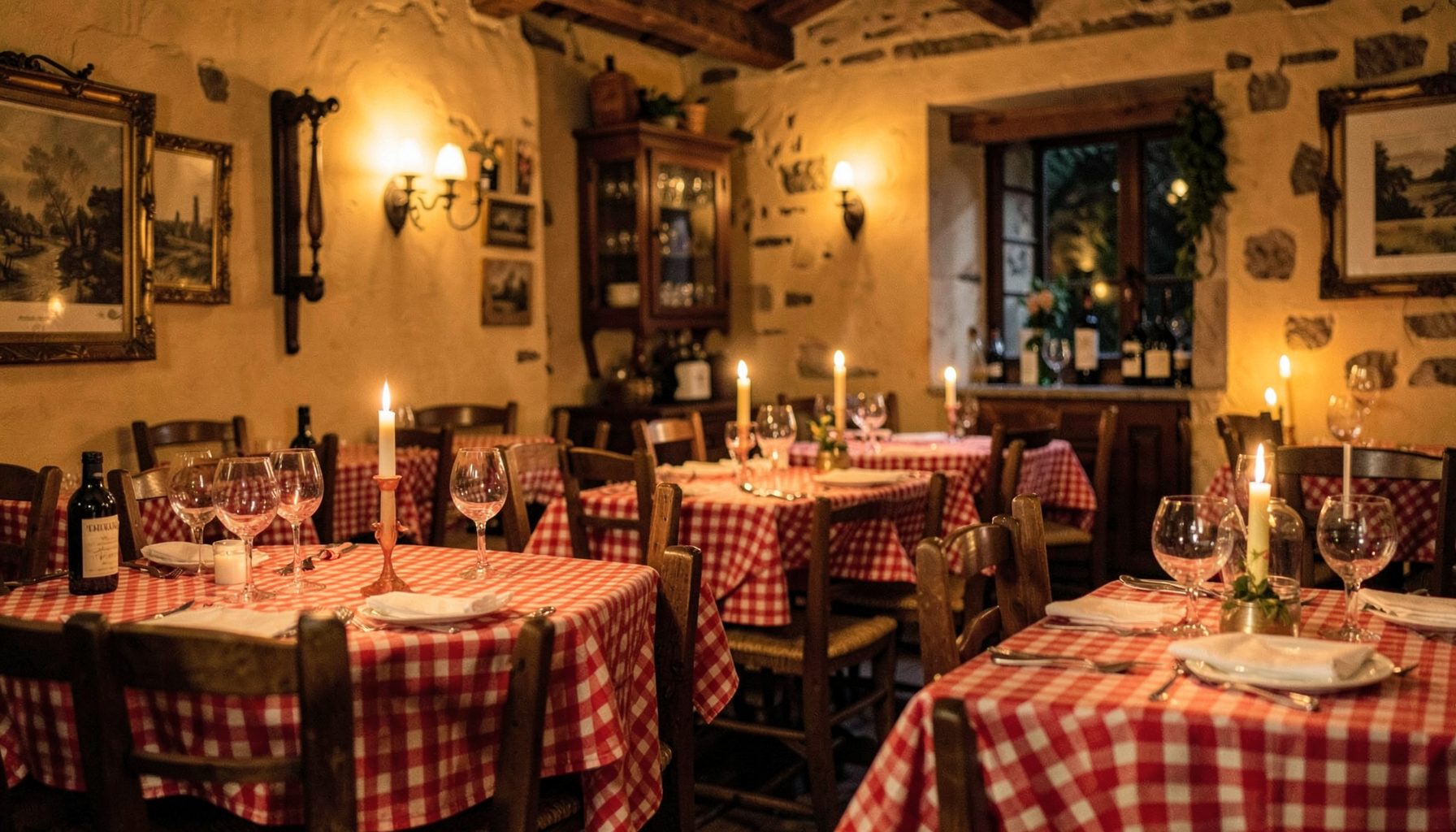
Rustic charm of our dining room inspired by Italian countryside
Walk through the wooden door of Taverna Santi and the room tells its own story before a single plate reaches the table. Reclaimed beams stretch across the ceiling, terracotta tiles cover the floor in uneven, sun-baked hues, and the soft hum of conversation settles into corners lined with olive-green walls. The space does not perform for the diner; it simply holds them, much like a stone farmhouse kitchen after a long morning in the vineyard. Every detail, from the slightly worn wooden chairs to the hand-glazed pottery on the shelves, has been chosen with a quiet hand.
Australians who have travelled through Tuscany, Piedmont, or the lesser-known hills of Basilicata often recognise this feeling the moment they sit down. The restaurant offers a sensory reminder of slow afternoons spent at a friend's casa di campagna, even for guests arriving fresh from Sydney, Brisbane, or a quick drive out from the Mornington Peninsula wine trail. In a country where Italian restaurants face fierce competition, from the established trattorias of Carlton to the newer openings in Surry Hills, a room that genuinely evokes the campagna feels like a quiet rebellion against the polished sameness of many dining rooms. It is the kind of place that invites you to stay long past dessert.
Roots in a Tuscan farmhouse
The look of the room began with a single idea: what would a working family's dinner table look like if it had survived three hundred Italian winters? Designers and the restaurant team pored over photographs of farmhouses in Chianti, the stone cascine of Lombardy, and the slow-cooking hearths of Emilia-Romagna. They were not chasing a postcard version of the countryside, with manicured vineyards and crisp white linens, but the lived-in comfort of a place where a grandmother might still roll out dough by hand.
That meant leaving imperfections on purpose. Wooden tabletops show the marks of decades of wheat harvests. Wrought-iron sconces were sourced from a small workshop near Vicenza and patinated by hand. The walls received a treatment of warm lime plaster, applied in uneven layers that catch the light differently throughout the afternoon. Nothing was designed to photograph well at a distance; everything was designed to feel close at hand.
Reclaimed wood and weathered stone
If you find yourself running your fingers along the banquette near the entrance, you are touching chestnut boards pulled from a deconstructed barn in Piedmont. The seat backs were rebuilt by a Sonoma County carpenter who studied with Italian woodworkers during a year abroad, and the joinery follows old methods that avoid modern screws where possible. The result is furniture that creaks gently, as if the room itself were exhaling.
The floor tells a similar tale. Reclaimed terracotta tiles, salvaged from estate renovations across Northern Italy, sit beside poured-in-place limestone counters near the open kitchen. Their colour palette drifts from dusty rose to deep ochre, mimicking the variation found in sun-bleached cotto pavers. Guests from Margaret River, the Barossa, or the Yarra Valley often comment that the materials remind them of a heritage homestead back home, a place where the kitchen bench has weathered decades of family meals.
Lighting that warms the room
The room's illumination was the element the team argued over longest. Italian countryside dining rarely relies on overhead fixtures, and the team wanted to honour that tradition. Instead, low-watt sconces glow along the plaster walls, beeswax candles drip onto hand-forged holders, and slim picture lights pick out the vintage olive-oil tins displayed on the back shelf. As evening deepens, the room softens into something that feels closer to candlelit than electric.
This gentle light changes how the food looks, and how the diners behave across the table. Plates of handmade tagliatelle catch the glow differently than they would in a bright bistro. Faces across the table seem to relax, shoulders drop, and conversation drifts toward slower topics. Australian diners accustomed to the bold, well-lit dining rooms of Melbourne's laneways are sometimes surprised by how quickly the hour slips away here. It is an unhurried kind of comfort that fits neatly with the country's growing appetite for slower, more mindful hospitality.
Tablescapes shaped by the season
Look closely at the tables and you will notice the details shift with the calendar. In the warmer months, small ceramic vases hold sprigs of rosemary, sage, or wild fennel cut from the kitchen garden. Linen runners, naturally dyed in muted ochre and rust tones, replace heavier cloths when the season turns warm. Glassware is simple: clear tumblers for water, classic stems for the regional wines selected each week.
The team deliberately avoids the over-designed tablescape that has crept into many high-end restaurants, the kind where every fork faces a precise angle and a folded napkin becomes a small sculpture. Here, the table invites use rather than display. Even the menu card, printed on heavy cotton paper and tucked into a slim leather holder, feels like a quiet companion to the meal rather than a marketing piece.
Where the room meets the menu
A dining room shaped by the Italian countryside would mean little if it did not match what arrived from the kitchen. The handmade pasta, the wood-fired dishes, the vegetable-forward plates, and the carefully chosen regional wines all draw from the same well of tradition. The space sets the expectation: a meal built on seasonality, locality, and respect for the people who grew, raised, or made each ingredient.
That connection shows up in small moments. When a server explains that the pici on your plate was rolled that morning by hand, the chestnut bench beneath you no longer feels decorative; it feels rooted in the same values. Australian visitors who have tasted Italian cooking in Adelaide's established Italian quarter or followed the rise of regional Italian menus in Perth will recognise this philosophy. It is food that respects its place, served in a room that does the same.
What to notice when you visit
- The hand-glazed pottery on the shelves comes from a Sonoma studio that trained with potters in Umbria.
- The wine list skews toward regional Italian varietals, including Barbera, Nebbiolo, and Vermentino, alongside a thoughtful selection of Australian producers from the Adelaide Hills and Beechworth.
- The candles are poured in small batches and are unscented, so the only fragrance at the table comes from the food and the wood fire.
- Ask about private events when booking if you are celebrating a milestone, since the rustic space lends itself to long, communal tables.
- The acoustics were tuned with the help of an acoustic designer, allowing conversation to feel intimate even when the room fills.
- Look for the small framed photographs above the bar; they document the farms and travels that shaped the restaurant's point of view.