The family behind the restaurant: our owners’ Italian heritage
Behind our owners’ Italian heritage is a culinary lineage shaped by cooking, travel and tables shared across generations. Food was prepared for the household rather than the camera, and the best dishes were often those that brought everyone back for another helping. That background is not a decorative theme at Taverna Santi; it guides the care taken with handmade pasta, wood-fired dishes and simple vegetables.
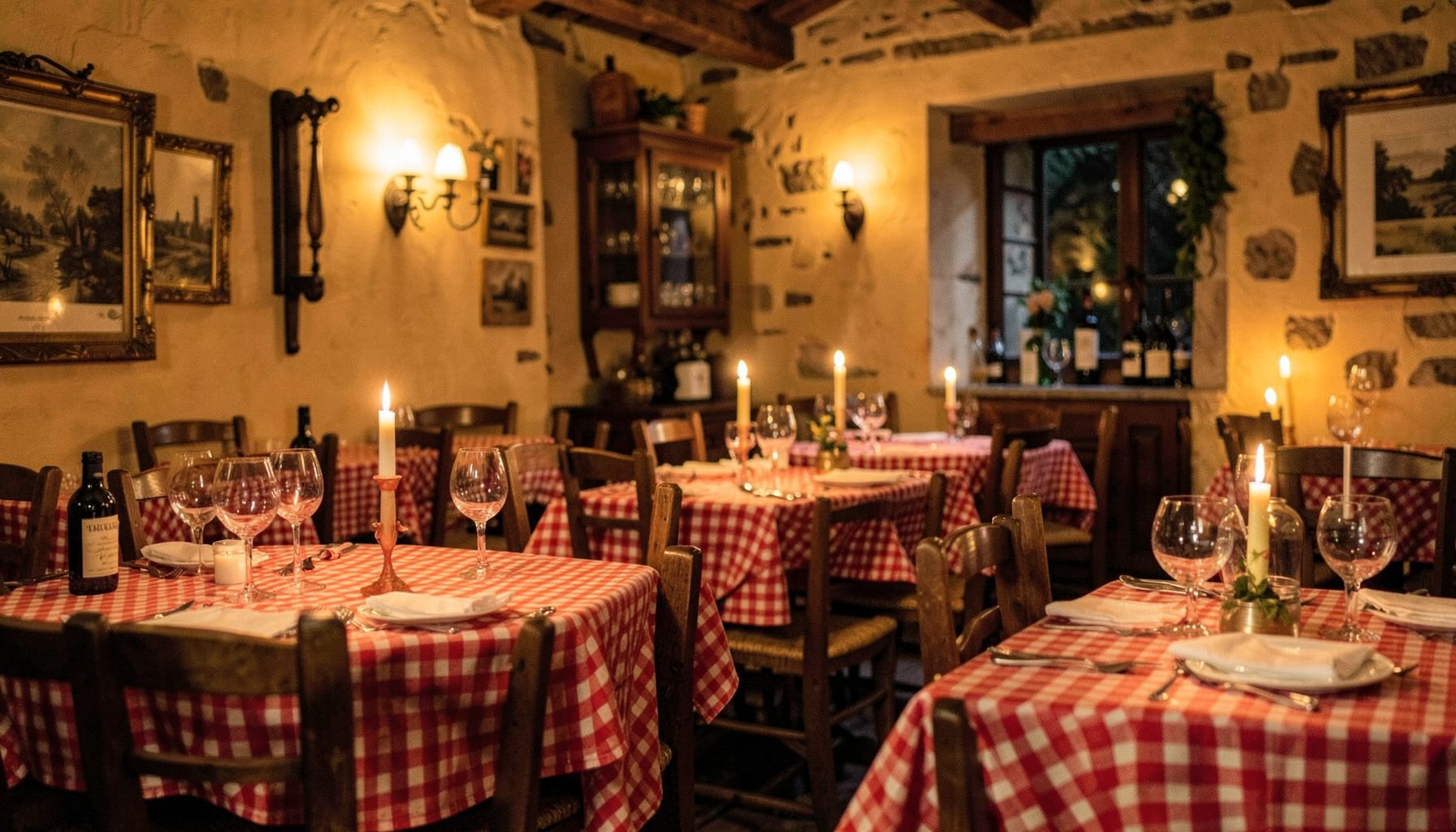
It also shapes the atmosphere. The restaurant’s rustic intimacy recalls the family table: a place where conversation, wine and food share the same rhythm. Every plate remains connected to Sonoma County’s farms and vineyards, yet the sense of welcome recalls the hospitality that first made the family’s Italian kitchen memorable.
Italian roots in Californian soil
Our owners’ story begins in Italy, where family cooking was less a performance than part of daily life. Bread, pasta and slow sauces were prepared for people gathered around a table, with relatives often carrying the next course into the kitchen. Techniques were learned through repetition, while recipes were adjusted by taste, season and whatever the garden or local market provided.
Life in America changed the setting, not the instincts. The family learned to work with different ingredients and a new climate, yet kept the same habits: source with care, cook with restraint and feed people generously. Sonoma’s abundance became a meeting point between old methods and new opportunity.
That balance is visible in the restaurant’s restraint. A plate can be composed simply, but the work behind it is exacting: dough rested, sauce reduced, vegetables treated with care. Heritage is preserved not by keeping every detail unchanged, but by carrying the reason for those details forward.
Recipes carried between generations
Some family instructions are precise without being rigid: cook until the pasta holds its shape, season in layers, let the sauce become glossy. The owners have carried those cues into the restaurant’s handmade pasta, where each piece is judged by touch and the sauce is built to cling rather than overwhelm.
Many of the same ideas travelled well to California. The wood oven brings a distinctly Italian sense of smoke and char to vegetables, meats and seafood, while Sonoma’s farmers supply ingredients that may differ from those in the family’s earlier kitchen. The method remains familiar even when the produce changes.
The same respect for humble ingredients can be seen in dishes such as stuffed cabbage with ham, where sweet, savoury and sharp elements depend on patience and balance. At Taverna Santi, that spirit is translated through local vegetables, cured meats and produce supplied by nearby growers.
The people who sustain the table
The owners remain closely involved in the restaurant’s daily rhythm, from greeting guests to considering what the kitchen should cook that week. Their influence is most visible in the atmosphere: personal, unhurried and based on the idea that a restaurant should feel like a well-run family home.
That idea depends on close relationships with local farmers. Seasonal ingredients determine the menu, and the kitchen adapts as fields, weather and harvests change. Sustainability here follows a practical path: buy thoughtfully, work with what is available and make careful use of every ingredient.
The same attention extends to the cellar and the dining room. Regional wines are chosen to complement the food, while staff share the stories behind growers, vintners and dishes. Hospitality becomes a practical extension of the family’s respect for those who grow and make what appears on the table.
Seasons shaped by Sonoma
At Taverna Santi, seasonality is practical rather than promotional. Winter may bring richer pasta and slow-cooked dishes, while spring and summer place brighter vegetables at the centre of the plate. Wood-fired cooking gives even the simplest produce a concentrated depth and subtle smokiness.
Geyserville sits close to the farms and vineyards of Alexander Valley and the wider Sonoma landscape. That proximity allows the restaurant to build meals around nearby ingredients rather than impose a fixed idea of Italian cooking. Regional wines follow the same sense of place, with bottles selected to echo the season and the plate.
The menu changes, but its character remains consistent. Handmade pasta, vegetable-focused dishes and wood-fired flavours all reflect the owners’ background, while local sourcing gives those traditions a distinctly Geyserville identity. It is Italian in method and Californian in its expression.
Why the welcome feels familiar to Australians
For Australian diners, the restaurant’s scale may feel immediately familiar. Melbourne’s tiny laneway dining rooms and the produce stalls around Queen Victoria Market have trained many guests to value close attention, fresh food and a room small enough for the kitchen to set the pace.
Australian restaurant habits also travel well here, though the details differ. Sydney diners accustomed to asking about BYO may wonder about corkage when choosing from an Italian wine list; a server can explain the cellar’s regional selections instead. Guests from Melbourne, Adelaide or Brisbane will recognise the pleasure of booking ahead, then lingering over a long lunch or dinner without rushing the wine.
The welcome uses familiar language too. An Australian server might call an afternoon catch-up an arvo and answer a request with no worries, while Taverna Santi turns that ease into polished hospitality. Sunday tables, shared plates and the farmers’ markets familiar in Australian cities all have a natural echo in Geyserville’s seasonal, community-minded style of dining.
Planning a memorable visit
The family’s story is not explained on a wall; it appears through the pasta, the open kitchen, the growers’ produce and the generous rhythm of service. These experiences offer different ways to encounter the heritage behind the restaurant.
- Reserve a table for the evening and allow time for the meal to unfold at the kitchen’s pace. The room is intimate, and a relaxed visit reveals details that a quick stop can miss.
- Choose a date when the seasonal menu interests you most, whether that means vegetable-led plates, handmade pasta or richer wood-fired dishes. The kitchen’s offerings follow the agricultural calendar.
- Add a chef-led demonstration to a dinner for insight into Italian technique, ingredient selection and the reasoning behind the menu’s changing composition.
- Mark a birthday, anniversary or family gathering with a private event shaped around shared plates, regional wine and the owners’ hands-on approach to hospitality.
- Ask the team about the growers, farmers and vintners supplying the restaurant. Learning where an ingredient came from adds another layer to a dish rooted in careful sourcing.
- Let the wine selection guide the order. Regional bottles chosen for their relationship with the food can make a simple pasta or vegetable plate feel more complete.
Taverna Santi also hosts tastings, seasonal suppers and celebrations, each suited to the same hands-on spirit. Whether the gathering is a date night, a family birthday or a table of friends travelling from Australia, the welcome stays personal: food with a story, wine from the region and a room that feels like the owners have invited you in.