Our summer garden: a visual tour of heirloom beans and zucchini
In the garden at Taverna Santi, summer arrives in shades of green, cream, violet and gold. Heirloom beans climb their supports in loose, leafy curtains, while zucchini plants spread beneath broad, textured leaves. Their flowers open like small suns in the morning, ready to be gathered for the kitchen while they are still fresh and delicate.
This is a garden designed for the table rather than display alone. The harvest moves quickly from soil to prep bench, where beans may be blanched, grilled or folded through handmade pasta, and zucchini can become a wood-fired side, a silky purée or the centre of a vegetable-focused plate. Each ingredient carries the character of Sonoma County: warm days, careful cultivation and a close relationship with nearby growers.
For Australian diners, the timing offers an interesting seasonal contrast. When Geyserville is enjoying its long summer, many people in Melbourne, Sydney or Adelaide are reaching for winter produce. The garden still speaks a familiar language, though: farmers’ market abundance, vegetables bought at their peak and the pleasure of turning a simple haul into something memorable for an evening meal.
Reading the garden in colour and texture
Heirloom beans are easy to recognise once you slow down and look closely. Some are long and slender, others plump and curved, with skins marked in burgundy, pale yellow, green or purple. A few varieties reveal their colour most clearly before cooking, while others soften into subtle shades after a brief blanch. Their irregular shapes are part of their appeal, showing that they have been selected for flavour, history and character rather than uniform supermarket presentation.
Zucchini brings another set of textures to the garden. The leaves are wide and slightly prickly, the stems firm, and the fruit may be smooth, ribbed, pale or deep green. Young zucchini feels crisp and springy when picked, with a tender interior that needs little treatment. Its blossoms are equally valuable, especially when harvested early in the day and used before they lose their delicate structure.
The visual contrast is part of the harvest’s rhythm:
- Purple-podded beans bring jewel-like colour to a green canopy.
- Yellow wax beans catch the light with a soft, buttery tone.
- Pale zucchini has a gentle sweetness and almost satin-like skin.
- Dark green zucchini offers a stronger visual anchor on the plate.
- Golden blossoms add a fleeting flash of summer to the picking basket.
From morning picking to the kitchen
A garden harvest is governed by timing. Beans are at their best when the pods are firm but not stringy, with enough snap to make their freshness obvious. Zucchini is often picked small or medium-sized, before the seeds become prominent and the flesh turns watery. The goal is to preserve the qualities that made the vegetables worth growing in the first place: clean flavour, vivid colour and a satisfying bite.
At Taverna Santi, these ingredients suit the restaurant’s Italian approach because traditional cooking often begins with respectful handling rather than elaborate intervention. Beans might meet olive oil, garlic, herbs or a little smoke from the wood fire. Zucchini can be shaved raw, charred until its edges deepen, or cooked slowly with onion until it becomes soft and savoury. The technique changes according to the harvest, while the ingredient remains recognisable.
That flexibility has a familiar Australian parallel. At a weekend farmers’ market, whether browsing the Carriageworks Farmers Market in Sydney or Adelaide Central Market, shoppers often choose what looks best first and decide on the meal afterwards. The same instinct guides the restaurant garden: pick the vegetables at their peak, then let the day’s menu follow their condition.
Two vegetables, many Italian expressions
Heirloom beans have an affinity with dishes that value contrast. Their crispness can cut through creamy sauces, while their grassy flavour works with tomato, preserved lemon, basil and good-quality extra virgin olive oil. A bowl of beans may be served warm with toasted breadcrumbs, arranged beside a wood-fired preparation, or folded through pasta with a light cheese or herb sauce.
Zucchini moves just as easily between rustic and refined treatments. Thin ribbons can be dressed with herbs and citrus, thick pieces can be grilled over a live flame, and grated zucchini can lend moisture to a savoury fritter or filling. The blossoms are especially suited to a gentle batter or a delicate stuffing, creating a dish that feels generous without becoming heavy in the summer heat.
The kitchen’s visual vocabulary may include:
- Hand-cut pasta carrying ribbons of tender zucchini and herbs.
- Charred beans finished with lemon zest and a drizzle of olive oil.
- Zucchini blossoms filled with a light, seasoned cheese mixture.
- Roasted heirloom beans served with garden herbs and toasted grains.
- A warm vegetable plate layered with smoke, acidity and fresh leaves.
The point is not to make the vegetables imitate something richer. It is to show how much depth can come from produce grown well and cooked with restraint. A little fire, salt and acidity can reveal sweetness that was already present in the garden.
A seasonal calendar across two countries
Summer in Sonoma County falls during Australia’s winter, making the garden feel especially vivid to an Australian audience. While Geyserville’s zucchini and beans are producing heavily, a grower in Victoria may be concentrating on brassicas, leeks and storage vegetables. In Queensland, the growing calendar differs again, shaped by subtropical heat, humidity and rainfall. There is no single Australian season, which is part of what makes the country’s produce culture so varied.
The shared principle is provenance. At Melbourne’s Queen Victoria Market, shoppers may ask where produce was grown and how long it has been in season. At a local farm gate or community market, the person selling the vegetables may also be the person who planted them. Terms such as “heirloom”, “small-batch” and “paddock to plate” are common, yet their meaning is strongest when backed by clear relationships and honest handling.
A restaurant garden works within the same seasonal economy. It cannot promise the exact same bean or zucchini every week, because weather, pollination and harvest quantities all shape what is available. That variation is valuable. It keeps the menu connected to the land and makes a summer supper feel like a particular moment rather than a repeated template.
The flavour of a living landscape
Walking through the garden reveals more than ingredients. It shows the work behind a plate: supports tied to climbing plants, flowers checked for pollination, leaves lifted to find the day’s beans and baskets filled in small quantities so the vegetables remain in good condition. A garden is a working landscape, with its own pace and imperfections.
That sense of place continues indoors through seasonal suppers, tastings and chef-led demonstrations. Guests may see how a simple vegetable is trimmed, seasoned and transformed, or notice the difference between a raw bean, a blanched bean and one kissed by the wood fire. These small changes make technique visible without taking attention away from the produce.
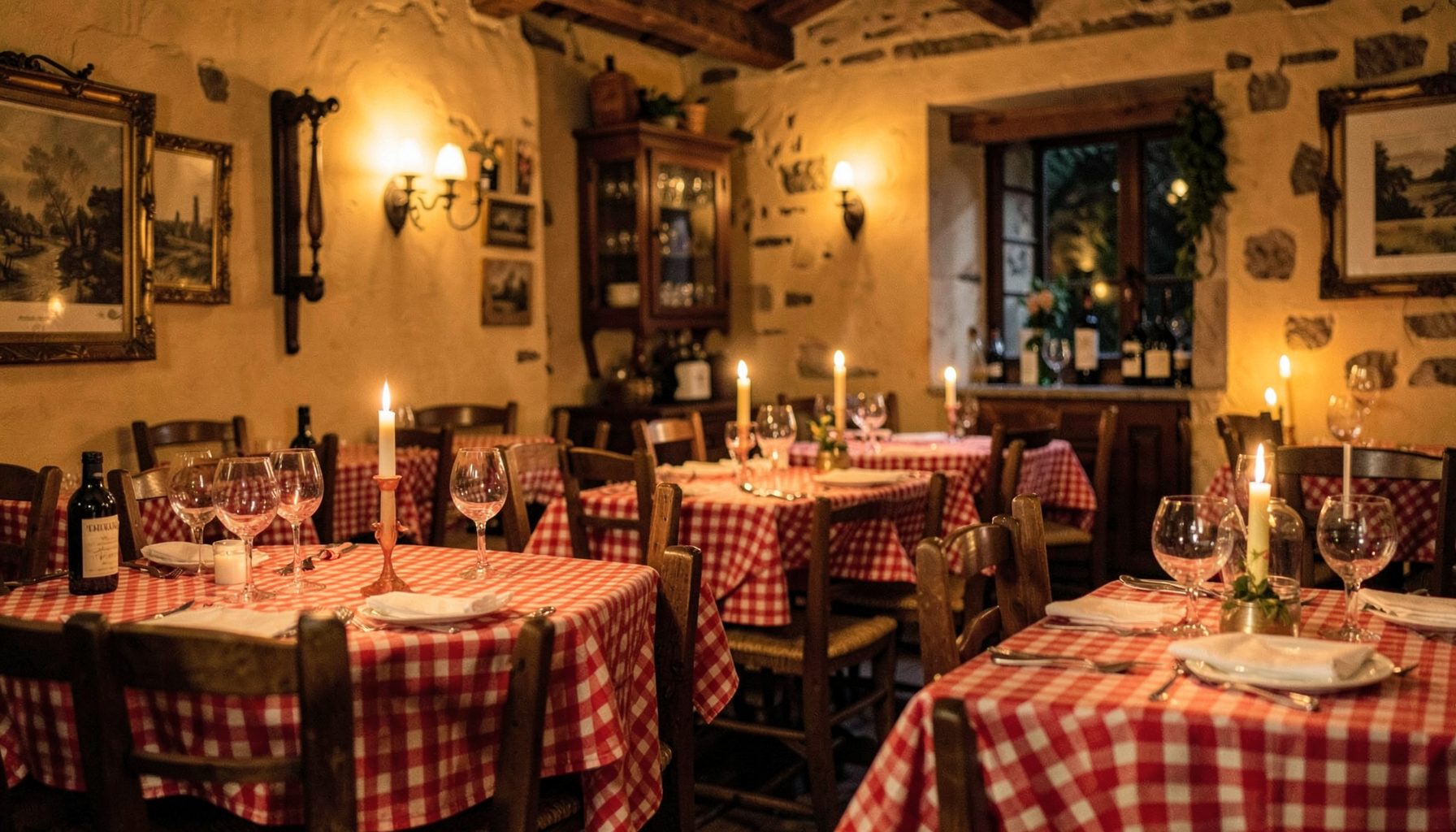
In the dining room, the summer harvest sits naturally beside regional wines, handmade pasta and the warm character of a rustic Italian setting. The colours of the garden may appear in a plate of beans, a dish of zucchini or the green herbs scattered over a shared table. What begins as a visual tour ends as a sensory one: crispness, sweetness, smoke, brightness and the unmistakable taste of vegetables gathered at the right moment.
For Australian visitors, the garden offers a glimpse into another hemisphere’s summer while affirming something close to home. Good produce needs attention, the seasons set the terms, and the best meals often begin with a basket of vegetables that looked irresistible before anyone knew what they would become.