How we make our own ricotta for fresh pasta fillings
At Taverna Santi in Geyserville, handmade pasta begins with dough, but its character often starts with what we put inside. Our fresh ricotta is soft and lightly lemony, giving filled pasta a tender centre against the gentle chew of the shell. We make it in small batches for service, using milk, careful heat, and time rather than a thick mixture poured from a tub.
The difference shows when a spoon meets the cheese. A fresh curd folds rather than crumbles, carrying clean dairy flavour while leaving room for herbs, nutmeg, and parmesan. We drain it only until excess whey has escaped, then season it close to the moment it meets the dough. For ravioli, agnolotti, and other stuffed shapes, that balance keeps every parcel delicate.
Ricotta has deep roots across Italy, where prized examples are made from sweet whey left by other cheese production. Ours is a milk-set ricotta made for pasta, a practical choice in our Sonoma County kitchen and a tribute to the farmhouse habit of turning simple ingredients into something memorable. Local milk, seasonal produce, and traditional technique shape the result; the rest comes down to patience.
Why fresh ricotta changes pasta
A supermarket container can make a pleasant filling, but the result depends heavily on how the cheese was stabilised and how long it has been drained. Ours is closer to a fresh dairy preparation: moist enough to bind without making the dough sticky, yet light enough that a filled pasta remains balanced. The clean milk flavour also gives us room to adjust each recipe for the season.
Ricotta does more than provide creaminess. Its mild acidity rounds out the richness of egg-rich pasta, while its body helps a filling hold its shape. We use it in combinations that move easily from rustic to refined: ricotta with roasted squash and sage, or ricotta with spring peas, lemon, and herbs. The cheese acts as a quiet foundation rather than dominating every bite.
Selecting milk for a delicate curd
We use pasteurised whole milk for the richest yet most controllable set. Milk from regional dairy producers gives the cheese a fuller flavour, while fat helps the curds stay tender. We check it before it enters the pan, since properly refrigerated milk can still carry faint acidity.
For home cooks in Australia, start with pasteurised full cream milk, the name many shops use for whole milk. Melbourne's Queen Victoria Market and Sydney's inner-city growers' markets offer opportunities to ask about provenance, while Italian grocers in both cities stock milk in useful quantities. Scales that read grams, as most Australian kitchen scales do, make a repeatable batch easier than relying on volume alone.
Coagulating the milk gently
We warm the milk slowly in a wide stainless-steel pot, stirring enough to keep it moving evenly. At roughly 35 to 40 degrees Celsius, we add a measured coagulant. Some batches use dissolved citric acid with a little rennet; others rely on acid alone. The mixture rests undisturbed so fine curds can begin forming.
Heat returns gradually, with gentle stirring to keep the curds soft. Between 80 and 90 degrees Celsius, the milk separates: pale curds rise through the liquid while whey gathers underneath. We remove the pan from the flame and let the curds settle before the first scoop, preserving the fragile texture needed for filling.
The whey is useful, too. Traditionally, it becomes the starting point for classic ricotta, so we avoid treating it as waste. We keep some for stocks, sauces, and bread, while the milk-set curds become our pasta ricotta. This reflects an Italian principle we value at Taverna Santi: a well-run kitchen uses what the recipe produces.
Draining the curds with restraint
The curds are ladled into damp muslin or clean cheesecloth, then gathered into a loose bundle. We let gravity do the work over several hours. Draining the cheese until it resembles firm yoghurt is the first stage; squeezing or pressing it hard would remove too much moisture and leave a filling that spreads across the pasta sheet instead of staying compact.
After the first drain, we mix in a small measure of salt, then rest the ricotta again. Salt helps draw away a little more whey and seasons the cheese from within. We keep a close eye on texture, because weather, milk, and the size of the batch all affect how quickly the bundle loses liquid. By evening, it should be creamy but still softly spoonable.
Building a balanced filling
Our simplest filling starts with fresh cheese, finely grated Parmigiano-Reggiano, lemon zest, and a pinch of nutmeg. The parmesan adds savoury depth, the zest lifts the dairy, and the nutmeg warms the mixture without overpowering it. We let it rest briefly so the grated cheese softens and the flavours come together.
Seasonal herbs and vegetables change how the base feels. In summer, basil, tender herbs, peas, or courgette make a light filling; cooler weather calls for squash, mushrooms, or braised greens. Australian kitchens show this seasonal contrast at Christmas, when pasta may be served in December heat. Ricotta with lemon, mint, and steamed greens can feel as celebratory as a richer winter sauce.
For many Italian-Australian families, Sunday lunch remains a natural setting for fresh pasta, and ricotta fillings suit that table as readily as a slow sauce. We also fold poached pear or apple into ricotta with honey and cinnamon for sweet pasta, paired with a crisp autumnal salad. A spoonful of chilli honey or chopped herbs can shift the same cheese in another direction while respecting the milk's clean flavour.
Pairing ricotta with fresh pasta
We spread a thin, even layer of filling over a fresh sheet of pasta, leaving a clean border at the edges. The sheet is folded, sealed, and cut with a sharp wheel, then each piece is checked for trapped air. A light brush of egg wash helps the parcels hold their shape in the pan and gives the surface a subtle sheen after cooking.
The shape depends on the filling. Delicate ricotta suits round ravioli, while layered agnolotti can show off a vegetable-rich mixture. We also use it in tortelli, filled parcels shaped by hand, and in folded pasta served with a simple sauce. When the cheese is the focus, we favour something restrained: butter, sage, brown butter, or a small amount of pasta water.
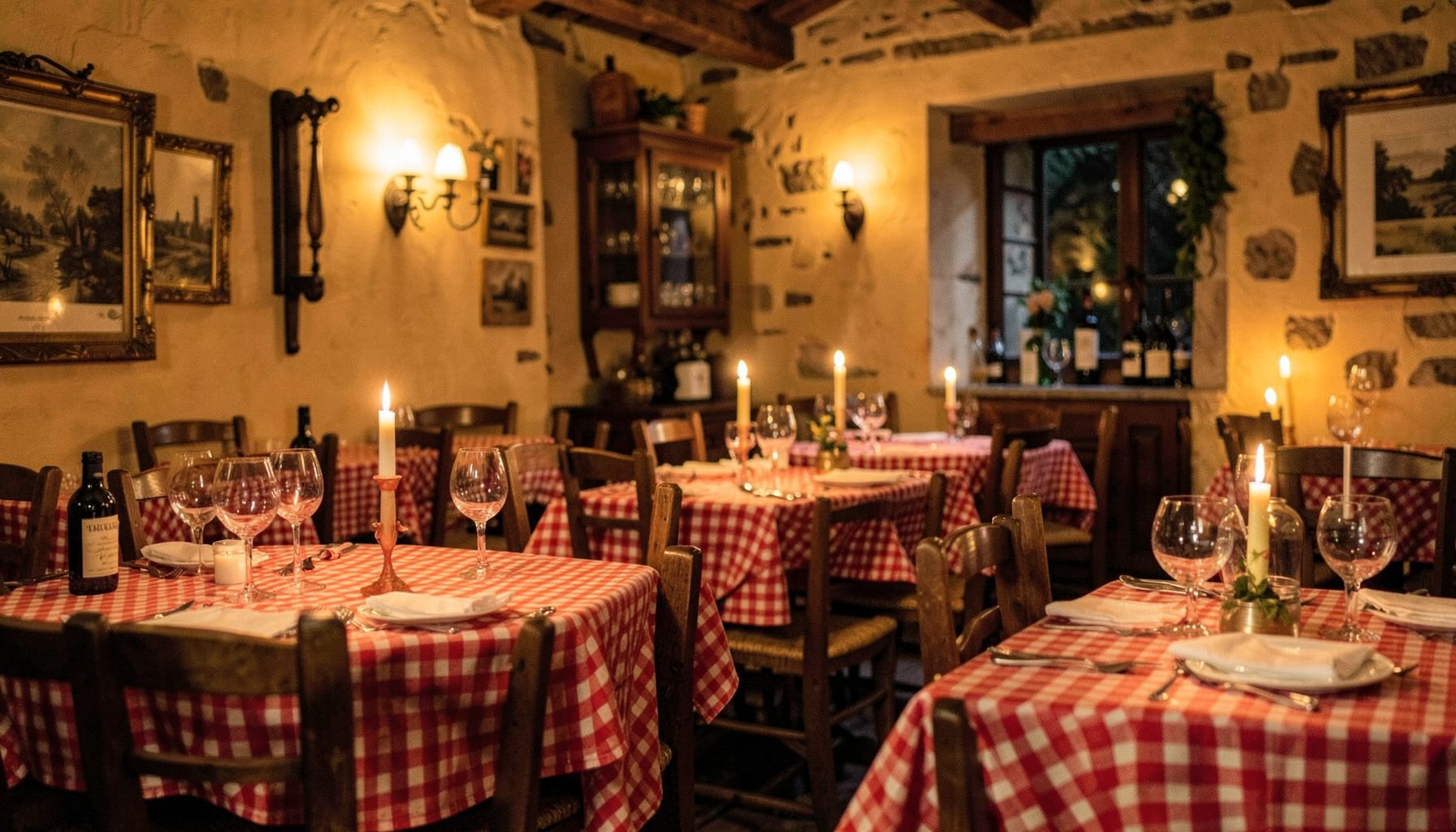
At the table, fresh ricotta benefits from a wine with equal clarity and texture. A cool, mineral-driven white from Sonoma County can complement lemon and herbs, while a lighter red works with mushroom or slow-cooked fillings. The aim is a table that feels generous but not crowded, much like the rustic room at Taverna Santi. Wood-fired vegetables, seasonal pasta, and regional wine all carry the same local emphasis.
From market milk to pasta filling
Our process is compact, but each stage affects the final plate. The care begins with milk chosen for flavour and consistency, moves through gentle coagulation, and ends with a short, controlled drain. We make the ricotta in our kitchen so the same people who shape the pasta can also judge how much moisture the filling needs.
At the market or pantry, we look for a few dependable basics:
- Pasteurised whole milk with a clear use-by date
- A fine-mesh strainer, muslin, or clean cheesecloth
- Lemon or citric acid for acidity
- Parmigiano-Reggiano, sea salt, and freshly grated nutmeg
- Seasonal herbs and vegetables selected for their fragrance
The kitchen sequence remains just as deliberate:
- Warm the milk slowly and add the coagulant at the right temperature
- Raise the heat gradually while stirring gently to protect the curds
- Rest the pot, then ladle the curds into a loosely gathered cloth
- Drain, season, and use the ricotta while it is still soft and creamy
This method suits the seasonal, locally sourced food we serve at Taverna Santi in Geyserville. It also extends naturally to our tastings, chef-led demonstrations, seasonal suppers, and private events or celebrations, where handmade pasta can become the centre of a shared table. The ingredient is simple, yet its texture carries the care visible in every handmade parcel.