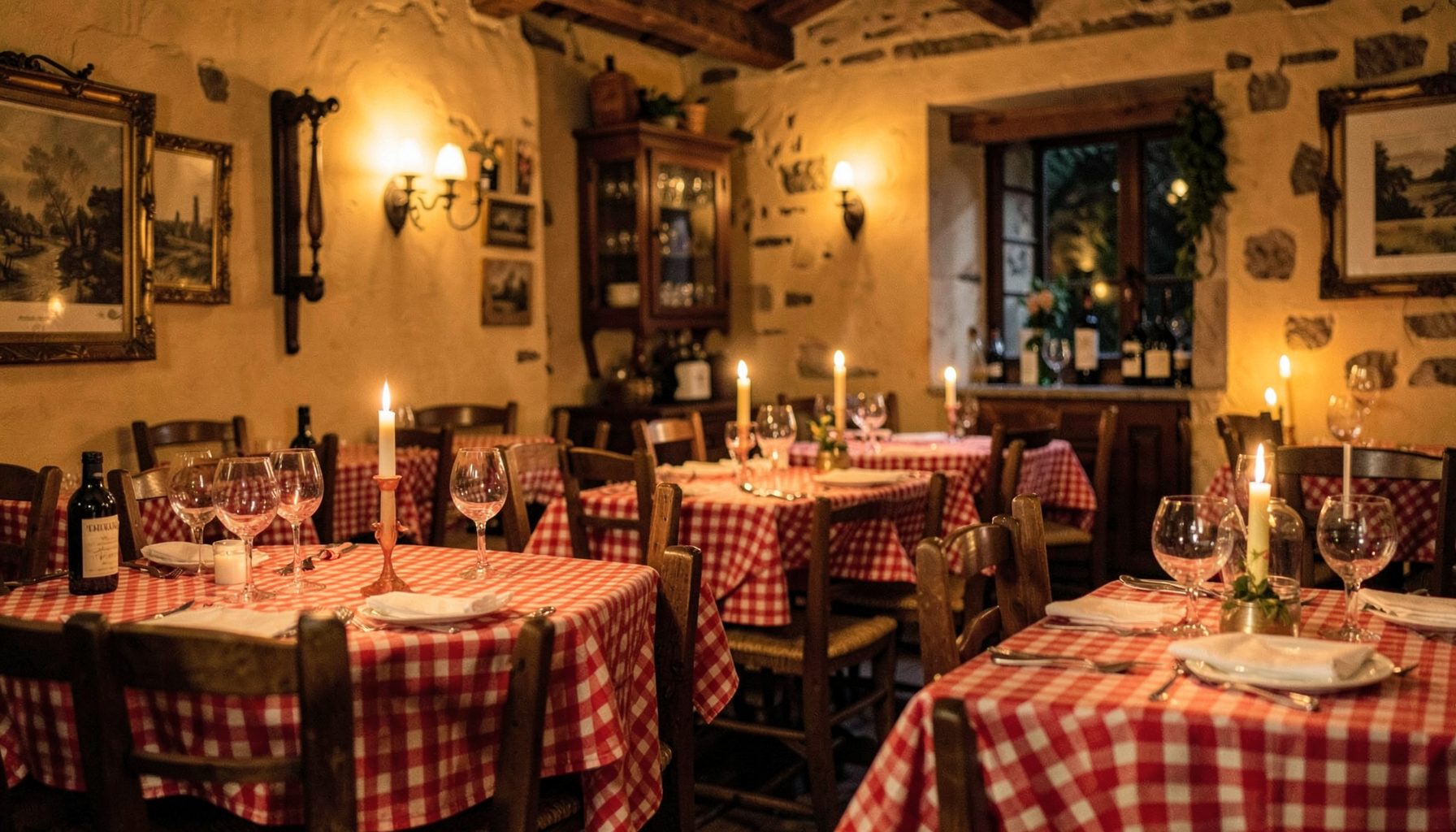
From Foraging to Table: Wild Greens in Spring
The first warm days of March in Sonoma bring a quiet urgency to the kitchen at Taverna Santi. The hills behind Geyserville shift from brown to vivid green, and the vines — still months from bud break — share the landscape with wild herbs and tender shoots. Within days, those greens appear on our menu: threaded through handmade pasta, scattered across wood-fired vegetables, tucked beneath slow-braised meats. The window from bloom to bolting is short, so we pick at dawn and serve by sunset.
For our guests, this is the most expressive season to dine with us. The plates that arrive in spring carry a sharpness and a mineral perfume that greenhouse produce cannot imitate. Wild greens connect a restaurant to its soil, its rainfall, and the quiet decisions of the farmers and foragers we work with. What follows traces that journey, from hedgerows and coastal cliffs on both sides of the Pacific, into our wood-fired hearth, and finally into a glass of Sonoma wine raised in a toast to the season.
The Spring Awakening of Wild Greens
After months of stewed roots and preserved citrus, spring resets the palate. Wild greens arrive with bitterness, pepper, allium pungency, and tender sweetness all at once. They are also nutritional powerhouses: nettles, dandelion, and chickweed carry more iron, vitamin C, and chlorophyll per leaf than most cultivated crops. That density, paired with their bright flavour, made them prized spring tonics in every Mediterranean farmhouse for centuries, a welcome relief after a long, lean pantry.
Wild greens bolt quickly, concentrating essential oils and gaining an intensity domesticated varieties rarely achieve. A handful of wild arugula or peppery watercress can carry an entire dish, allowing a cook to use less fat and salt. A bowl of spaghetti with wild greens, garlic, chilli, and a thread of good olive oil can feel as complete as a five-course menu, the kind of restraint we lean into at Taverna Santi all season long.
Wild Flavours Carried from the Italian Hills
The Italian tradition of gathering erbe spontanee runs through every region. In Puglia, foragers head to the macchia for wild fennel, chicory, and bitter rapini relatives. In Tuscany, the spring basket fills with borage, dandelion, and the wild rocket that lines the olive groves. Southern cooks turn bitter greens into frittate, pasta fillings, and the iconic pasta con le sarde. Each landscape produces a different palette, shaped by altitude, soil, and proximity to the sea.
Our chef draws on this vocabulary each spring. Wood-fired focaccine arrive layered with braised chicory and smoked scamorza. Hand-rolled pici gets tossed with a rough pesto of wild fennel fronds, almonds, and preserved lemon. Vegetable-focused celebration plates put the foraged ingredient at the centre, with legumes, grains, and slow-cooked proteins orbiting around it. Wild greens are not a garnish in our kitchen; they are the headline act for a few precious months.
A Calendar of Spring Foraging
By late February, the first wild garlic pushes through damp leaf litter. Its broad, glossy leaves and white star-shaped flowers are unmistakable, and the entire plant can be used. March brings stinging nettle, which loses its sting the moment it meets heat and turns into a silken puree ideal for filling ravioli. April opens up wild rocket, peppercress, and watercress, followed by elderflowers that perfume the cooling evening air.
May is the most generous month. Dandelion, plantain, sorrel, wood sorrel, miners' lettuce, purslane, and lambs quarters appear in overlapping waves. By June, tender leaves give way to tougher growth and the first seed heads. We work closely with local foragers and farms that grow cultivated analogues — sorrel, mizuna, tatsoi — so the menu can transition smoothly into summer. Our cooks walk the land, learn the plants, and bring their own observations back to the pass.
Wild Greens in an Australian Kitchen
For Australian readers, the foraging landscape carries its own character. Native greens such as warrigal greens — also called New Zealand spinach or sea spinach — grow along the southern coastline and have a salty, mineral quality similar to samphire. Native sea parsley, finger lime leaves, and pepperberry leaf appear in greengrocers from Sydney to Perth. Weekend markets, from the Queen Victoria Market in Melbourne to the Adelaide Showground Farmers' Market, now stock bunches of wild rocket, foraged sea herbs, and farm-grown native ingredients.
Laws shape the practice in important ways. In New South Wales, foraging in national parks and many state forests is prohibited without a permit, and several protected species cannot be picked. Victoria allows small-scale gathering on some public land for personal use but protects rare flora, while Tasmania's land-rights framework means many gathering sites require explicit permission. The safest path for home cooks is to buy from licensed wild-harvest suppliers or to grow easier European species in a kitchen garden. Several Australian chefs, including those working in Hobart and on the Mornington Peninsula, now collaborate with Aboriginal advisors to bring traditional native greens into fine dining, quietly reshaping how the country thinks about its edible heritage.
From the Basket to the Pan
Treating wild greens well is mostly about restraint. Most varieties need only a few seconds in a hot pan with good olive oil, a clove of crushed garlic, and a pinch of chilli. Longer cooking flattens the character that makes them worth gathering. Bitter greens — chicory, dandelion, wild rocket — benefit from a brief wilting, a squeeze of lemon, and a shaving of aged pecorino. Delicate leaves such as wood sorrel or miners' lettuce should be added raw at the very last moment, like a herb.
Our cooks follow a few standing rules. Greens are washed three times, spun dry, and cooked in small batches. Salt is added at the end so the leaves do not release their water prematurely. Acid — lemon, verjus, or a good vinegar — is introduced off the heat. For pasta, greens are blanched, shocked, and squeezed dry before being folded into a sauce, which keeps the colour vivid and the texture intact.
Pairing Wild Greens with Sonoma Wines
Wild greens ask a great deal of a wine: enough acidity to lift bitterness, enough body to carry oil, and a herbal or saline edge that mirrors the foraged ingredient. After years of pairing, our wine team has settled on a handful of reliable approaches for spring menus. The notes below are useful for diners planning a private supper, a tasting evening, or simply matching a wild-green pasta at home.
- A cool-climate Sauvignon Blanc with spaghetti, wild garlic, and chilli, where the wine's cut and citrus sharpen the allium
- A skin-contact white alongside bitter greens, dandelion, and aged pecorino, since gentle tannin balances the bitterness
- A light, peppery Grenache or Pinot Noir served slightly cool with wood-fired lamb, charred chicory, and salsa verde
- A sparkling wine poured with a vegetable-focused spring plate, where bubbles refresh the palate between bites of peppery rocket
- A dry rosé matched with a frittata of wild greens or grilled fish with sea parsley, where the wine's salinity echoes coastal notes
Private suppers, chef-led demonstrations, and seasonal tastings let our team walk guests through these pairings in person. For readers planning a long-table evening in Melbourne, Sydney, or Adelaide, a similar approach works beautifully: lean toward whites and rosés with bright acidity, keep reds in the cooler, lighter end of the spectrum, and pour a small glass of something sparkling to open the meal. Spring rewards the cook willing to let the green lead.