An Olive Harvest Feast Worth Flying Across the Pacific For
Each November, the rolling hills around Sonoma County turn golden under a particular kind of light, and the olive groves behind Taverna Santi begin their slow, generous yielding. The annual olive harvest tasting has become one of those rituals that diners mark on their calendars well in advance, the way a Sydneysider plans around the Sydney Festival or a Melburnian circles the date of a spring racing long lunch. It is part celebration, part working kitchen event, and entirely rooted in the agricultural rhythm of northern California.
For Australians with a soft spot for single-estate olive oil, slow food, and the kind of generous table that stretches across an afternoon, this is a special invitation. The evening gathers local farmers, winemakers, regulars from Healdsburg and Cloverdale, and travellers who have made a pilgrimage specifically for the date. What follows is a window into that night, and how to plan around it if you are travelling from the other side of the world.
The Rhythm of an Olive Harvest
The Mediterranean calendar has always moved with the olive tree. Long before refrigeration, before stainless steel tanks and centrifugal extraction, families gathered between late autumn and the first cold snap to bring the fruit down from the branches. In Tuscany and Puglia, the work is still done partly by hand, partly with long combs, with nets stretched beneath the canopy and a great deal of shared bread and wine at the end of each row.
Taverna Santi honours that lineage. The kitchen sources from groves within a short drive of Geyserville, including estate plantings and small family ranches that have farmed the same trees for generations. Oil pressed within hours of picking carries a grassy, peppery intensity that simply cannot be replicated by anything that has travelled. Tasting that oil alongside cured meats, raw vegetables, and toasted country bread is the first gesture of the night, and it sets the tone for everything that follows.
A Welcome Built on Small Bites
Guests are seated in the bar and on the wraparound porch while the kitchen sends out the opening round. These plates reference the Mediterranean from many angles, and the bartender pours something light and welcoming - a chilled Vermentino, a dry sparkling wine from Carneros, or a glass of rosato. It is the equivalent of the leisurely aperitivo you might find at a back-street enoteca in Rome, though transposed to a Sonoma evening.
Among the welcome bites you will likely find grilled focaccia rubbed with young oil, a small bowl of marinated Castelvetrano olives, and a punchy plate of oil-packed sardines with shaved red onion and a few drops of vinegar that wakes the palate without overwhelming it. There is always something pickled, something crisp, and something lifted with herbs cut that morning from the kitchen garden. The goal is to settle everyone in, and to remind the room that the harvest is, above all, a time for generous hospitality.
Pasta Made by Hand, Served Family Style
By the time the second course arrives, the room has loosened up. Tables are encouraged to share, the way a long Sunday lunch unfolds at an Italian nonna's house, or how a Carlton crowd passes plates around a marble table at noon. The pasta course is the heart of Taverna Santi's identity, and it is where the harvest tribute becomes loudest.
Hand-cut tagliatelle arrives with a slow-cooked ragù of local mushrooms and a generous slick of new oil. There might be a raviolo filled with squash and ricotta, finished with brown butter and sage, or a tangle of tonnarelli tossed with sea urchin and breadcrumbs. Each plate is a chance to show off what the season has produced, with no single ingredient repeated across the evening.
From the Wood-Fired Oven and Grill
The mains lean heavily on the wood-fired hearth that anchors the kitchen. Vegetables, treated with the seriousness of a main course, get the treatment first - whole heads of radicchio charred until wilted, sweet potatoes roasted in embers, leeks blackened at the tips and served with anchovy butter. The carnivores in the room are looked after too, with whole fish, dry-aged duck breast, or a slow-cooked pork shoulder that falls apart under a fork.
What ties it all together is the oil. Drizzled raw over roasted vegetables, whisked into a salsa verde for grilled meats, or carried in a small pitcher alongside bread at every table, the just-pressed oil is the quiet hero. Floor staff will talk guests through each application, and there are usually two or three vintages to compare side by side.
A Wine List Tuned to the Harvest
The wine list at Taverna Santi leans regional - Sonoma, the North Coast, and a small but thoughtful selection from further afield. For the olive harvest evening, the team collaborates with vintners who share their farming ethos. Expect pours from producers who farm organically or biodynamically, with a focus on Italian varieties that have found their footing in California soil.
Sangiovese, Nebbiolo, and Barbera appear in some form, alongside more unexpected bottles - a Friulano from Russian River, a Lagrein from a small producer in Bennett Valley. Light reds and skin-contact whites work beautifully with the oil-rich menu, while chilled sparkling makes the welcome bites sing. Anyone who has spent a Saturday arvo at the Barossa Valley or McLaren Vale will feel right at home with the language of terroir on the printed list.
Rustic Dining in the Heart of Sonoma
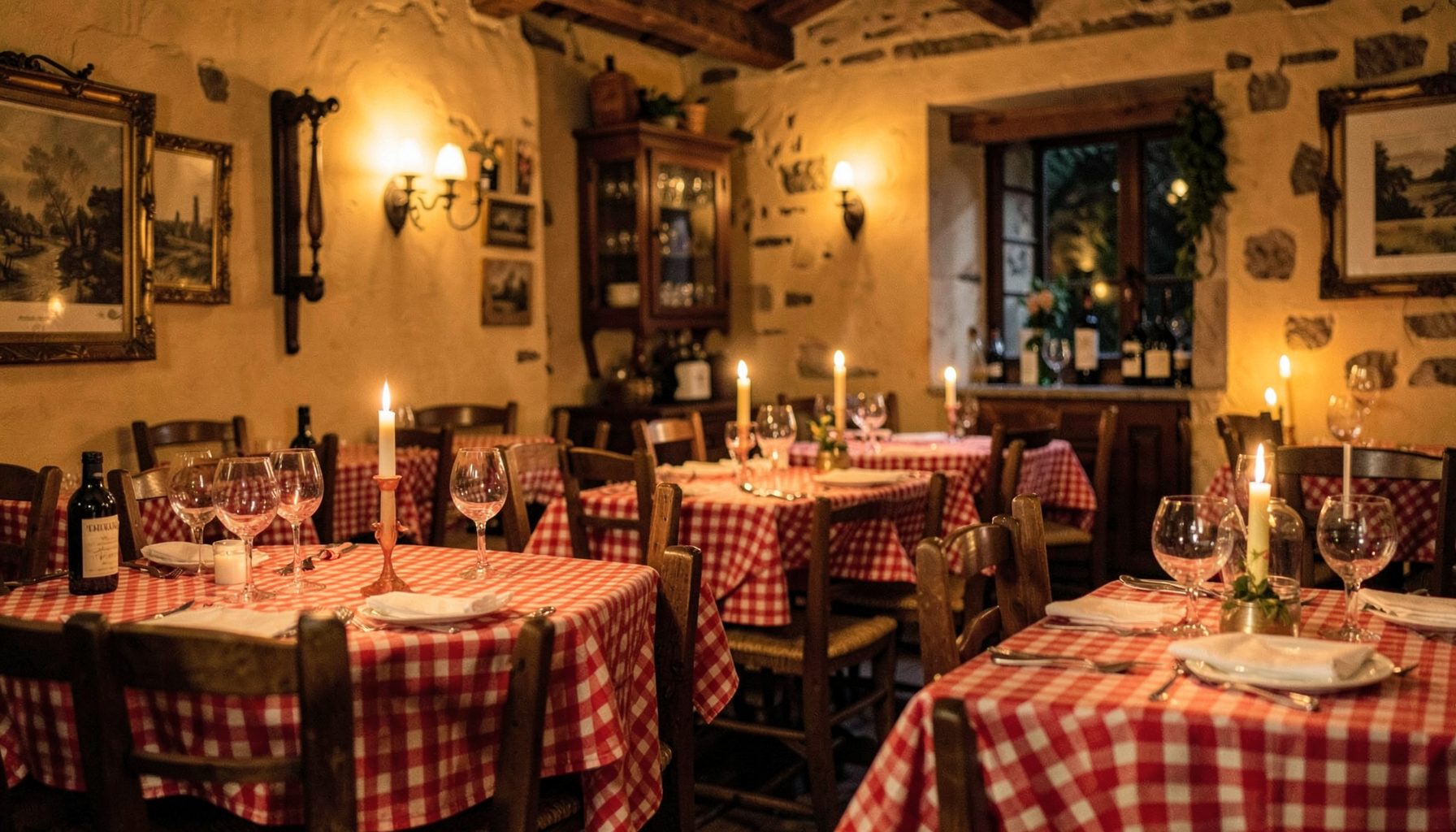
Taverna Santi sits in a converted building with exposed beams, hand-plastered walls, and windows that look out onto the surrounding hills. The dining room holds roughly fifty guests, which keeps the evening feeling more like a long table than a restaurant service. Candles, copper pots, and clay jugs of oil line the shelves, and the hum of conversation rises in the way only a packed Italian room allows.
Private harvest dinners for groups of ten to twenty can be arranged in the back room, with extended menus and access to the winemaker or the grower of the evening. For larger celebrations, the team works with the courtyard in warmer months and the cellar during cooler evenings. Groups travelling from Brisbane, Perth, or Sydney - chef's tables, anniversaries, winemaker hosting trips - have all made the room their own.
Booking, Logistics, and What to Bring
Seats for the olive harvest tasting sell out quickly, often six to eight weeks ahead. Tickets are released in batches, and accommodation in Geyserville and Healdsburg fills up around the same dates. Most diners combine the evening with two or three nights in Sonoma, allowing time to visit the pressing at a nearby mill, walk through vineyards in the morning fog, and unwind at mineral hot springs before flying home.
Dress is relaxed but considered - think long sleeves, comfortable shoes, and an appetite for staying late. The kitchen accommodates vegetarians, vegans, and most common dietary requirements if given notice. Group bookings of six or more should reach out to the events team directly for the harvest menu, which is priced as a set experience with optional wine pairings.
Highlights From the Olive Harvest Table
- Book early, as the harvest tasting releases in batches and the smaller sittings disappear within a fortnight.
- Choose the optional wine pairing, as the sommelier team has built it specifically around each course and each pressing.
- Plan a Sonoma-side stay of at least two nights to soak in the harvest atmosphere rather than rushing back to San Francisco.
- Ask about the pressing tour add-on, which most guests find surprising and humbling.
- Mention any dietary needs at booking so the kitchen can rework the pasta and main courses ahead of time.
- Bring a small notebook for the oil and wine comparisons, as there is more detail than memory will hold.
- Leave room for dessert, since the olive oil cake with mascarpone and citrus is one of the night's quiet triumphs.